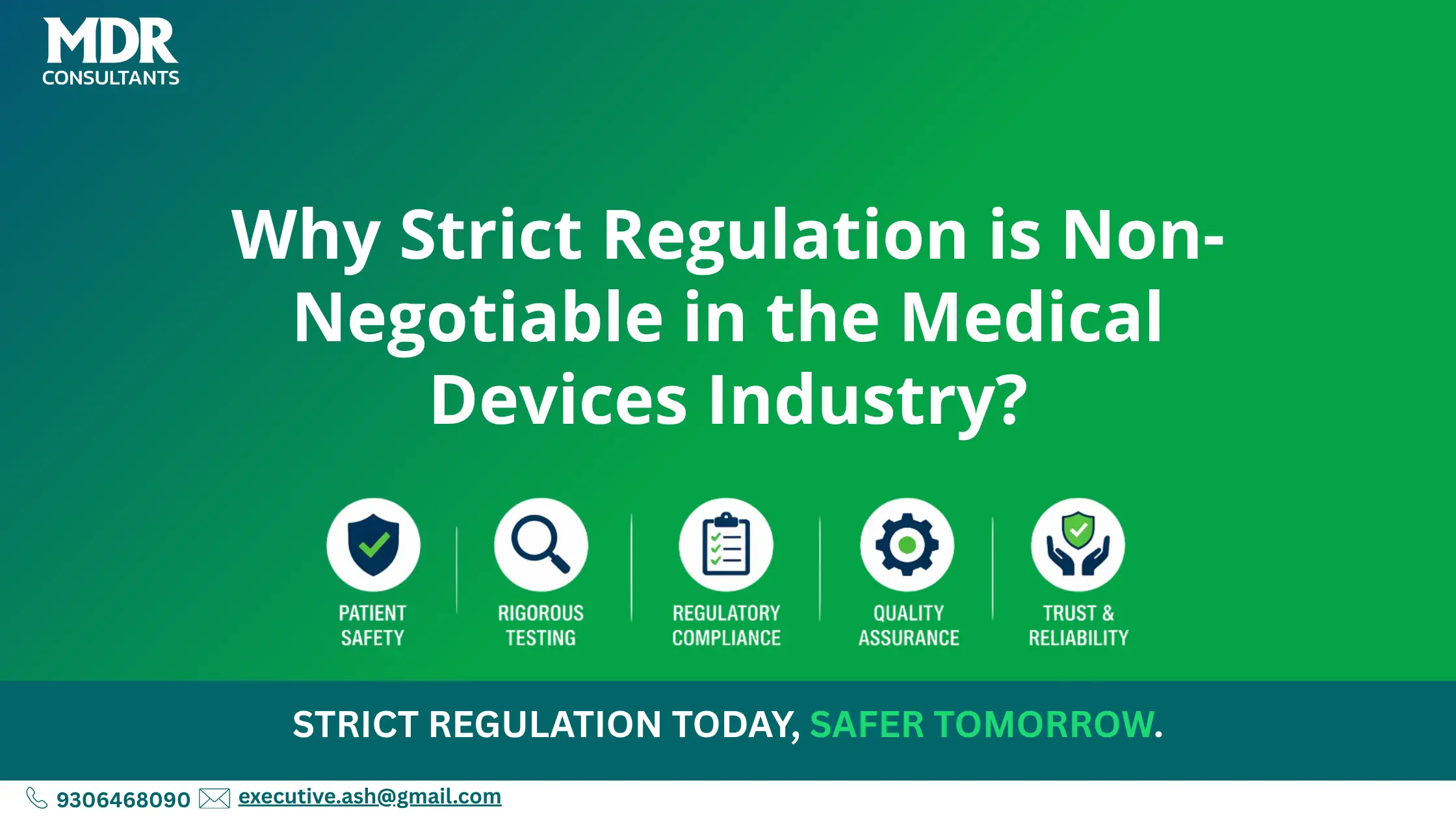
In a world where a simple syringe, a life-saving pacemaker, or an AI-powered diagnostic scanner can mean the difference between recovery and tragedy, one question stands out:
Can we really afford to leave medical devices unregulated?
The answer is a clear No. As the global medical devices market surges past $600 billion in 2026 and heads toward $1 trillion+ in the next decade, robust regulation has become essential — not as red tape, but as a critical safety net for patients, a foundation for trust, and a driver for responsible innovation.
1. Patient Safety First: Devices Touch Lives Directly
Unlike medicines that are metabolized by the body, most medical devices work through physical, mechanical, or electrical means. They are implanted, inserted, or used for critical monitoring — often for years.
Without regulation:
Real-world lessons from history:
Strong regulations enforce risk-based classification, mandatory testing, quality management systems (like ISO 13485), and post-market surveillance to catch problems early and protect lives.
2. Ensuring Devices Actually Work (Safety + Effectiveness)
A device may be “safe” but useless if it fails to deliver accurate results. False readings in diagnostics can delay treatment, while ineffective implants waste resources and endanger patients.
Regulations require manufacturers to prove both safety and performance through:
This prevents ineffective products from entering the market and ensures manufacturers’ claims are backed by science.
3. Building Trust in Healthcare Systems
Doctors, hospitals, and patients need confidence that every approved device meets high standards. Clear regulations provide independent oversight, standardized labeling, and traceability — building that trust.
For the industry, compliance opens global markets (FDA, EU MDR, India’s CDSCO, etc.). Non-compliance risks recalls, bans, lawsuits, and reputational damage — costs far higher than investing in quality upfront.
4. Fostering Responsible Innovation, Not a Race to the Bottom
Many fear that regulation slows innovation. In reality, well-designed rules encourage better innovation by:
Unregulated markets allow corner-cutting by unethical players, which hurts legitimate innovators and damages the entire sector’s reputation.
5. Economic & Public Health Advantages
6. Tackling Modern Challenges
Today’s devices are smarter — software-driven, IoT-connected, and AI-enabled. Regulations must evolve to address:
Global harmonization efforts (like IMDRF principles) help countries align while adapting to local needs.
Why India’s GSR 78(E) Matters in This Global Picture
Before 2017, most medical devices in India were regulated loosely under drug rules — creating a dangerous mismatch. The Medical Devices Rules, 2017 (notified via GSR 78(E)) introduced a dedicated, risk-based framework (Class A to D), licensing, clinical investigation pathways, and better post-market vigilance.
It was a necessary step to:
This framework continues to evolve, supporting India’s ambition to become a global medtech hub while safeguarding its 1.4 billion citizens.
Final Thought: Regulation is Protection, Not Obstacle
Medical devices hold immense power to heal, diagnose, and improve quality of life. But that power comes with responsibility. Strong, science-based, and adaptive regulations ensure innovation serves humanity without causing harm.
They protect patients, empower ethical manufacturers, build public confidence, and create a sustainable industry. History has shown us the painful cost of weak oversight — we cannot afford to repeat those mistakes.
Last Updated : 29 Apr 2026
The Brand That Promises To Turn Your Business Around!
MDR Consultants excels in guiding medical device companies through global regulatory approvals with tailored solutions, clear communication, and efficient delivery. Their mission-driven approach fosters innovation, compliance, and long-term partnerships built on trust and excellence.

As I observed this company maintains a very good and cooperative environment. "MDR" consultancy is equipped with all modern amenities. They guide you the best. I highly recommend this firm. The entire team is very courteous and helpful. Highly Professional team and the owner is very skilled and humble.

Outstanding expertise! They streamlined our regulatory process, saving us immense time and stress. A truly invaluable partner for medical device compliance.

MDR Consultants have been a reliable partner for our CDSCO registration needs. Their efficient processes and in-depth knowledge of the regulations saved us significant time and resources. We are confident about the quality of their services and their commitment to client satisfaction.

MDR team has consistently delivered quality work, meeting deadlines and exceeding our expectations. We really recommend MDR for regulatory support

My experience with MDR consultants is wonderful. They have in-depth and vast knowledge about their work. They have the team of incredible people. Their commitment towards the client is highly appreciable. I highly recommend to have their services.

MDR IS THE BEST SOLUTION FOR MEDICAL DEVICES CONSULTANCIE THEY PROVIDE ALL THE SOLUTIONS AND PROPER GUIDANCE.AND DELIVER THEIR SERVICES ON TIME .

MDR team has consistently delivered high quality work, meeting deadlines and exceeding our expectations.

It was really a nice experience working with MDR consultancy.They guide you properly with their tranparent work ethics.Honestly MDR consultancy helped me a lot in growing my business.

A very friendly bunch of efficient employees in the team of MDR.A very professional approach towards their job and all my work was done hassle free with least follow up from my side.Keep up great work team MDR!!!!👍👍

The services are top notch , highly recommend for Mr Ashish

Best regulatory services..for medical devices…best in the business

Have a rich experience in the field of consultancy.

Extremely helpful and responsive

Very good experience

Good Services

Appreciable work.

True consultant

Medical Device Regulatory Consultants
37-38, 1st Floor, Near Makhan Bhog, G.T. Road,
Kundli Industrial Area, Delhi NCR, 131028