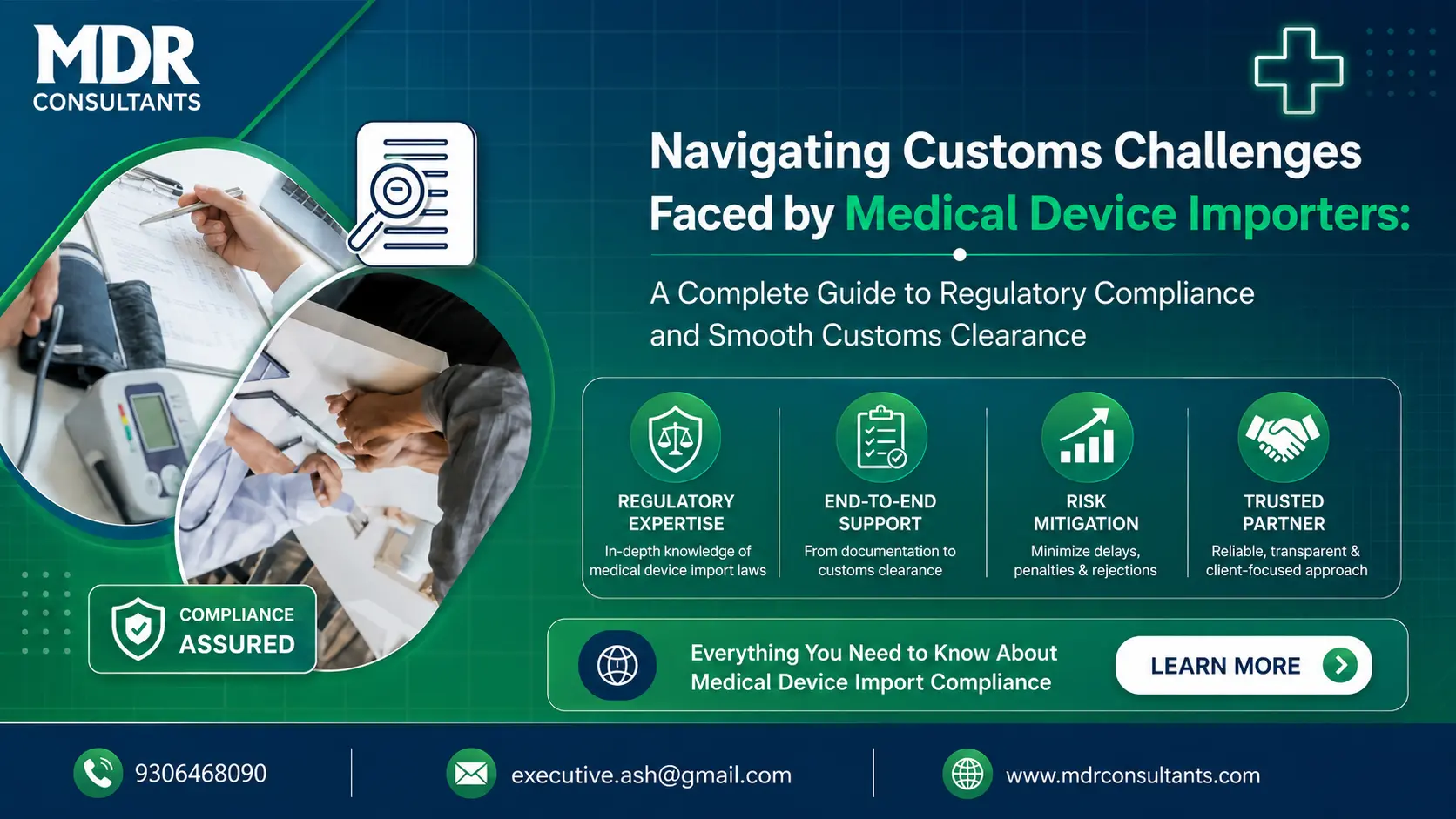
Medical device imports involve complex customs procedures, regulatory approvals, and extensive documentation. This comprehensive guide explores the most common customs challenges faced by importers and provides practical compliance strategies to help ensure faster clearance, minimize delays, reduce costs, and maintain compliance with applicable regulatory requirements.
The global medical device industry relies on efficient international trade to ensure that healthcare providers have timely access to safe and effective medical technologies. However, importing medical devices is significantly more complex than importing general consumer goods due to the strict regulatory framework governing these products.
In India, imported medical devices are regulated under the Medical Devices Rules, 2017 (MDR, 2017) framed under the Drugs and Cosmetics Act, 1940, and are monitored by the Central Drugs Standard Control Organisation (CDSCO). In addition to meeting regulatory requirements, importers must also comply with customs procedures administered under the Customs Act, 1962 by the Central Board of Indirect Taxes and Customs (CBIC).
Before discussing the challenges, it is important to understand the basic customs clearance process.
A typical medical device import involves:
Importing medical devices is a highly regulated process that requires compliance with both customs laws and medical device regulations. Unlike ordinary consumer goods, medical devices directly impact patient health and safety, making them subject to stricter scrutiny during customs clearance. In India, imports are regulated under the Medical Devices Rules (MDR), 2017 by the Central Drugs Standard Control Organisation (CDSCO), while customs procedures are governed by the Customs Act, 1962 and administered by the Central Board of Indirect Taxes and Customs (CBIC).
Even minor errors in documentation, product classification, or regulatory approvals can delay shipments, increase costs, and disrupt the supply chain.
One of the most common customs challenges is the incorrect classification of medical devices. Every imported device must be assigned the correct Harmonized System (HS) Code for customs purposes and the appropriate classification under the Medical Devices Rules, 2017. These classifications determine applicable customs duties, import requirements, and regulatory obligations.
Best Practice: Verify the HS Code and medical device classification before shipment by consulting official tariff schedules, CDSCO guidance documents, or experienced customs professionals.
Accurate documentation is the key of successful customs clearance. Customs authorities carefully review every document submitted with an import shipment to confirm that the goods comply with legal and regulatory requirements. Even small inconsistencies between documents can trigger additional verification or inspections.
Essential import documents typically include the Commercial Invoice, Packing List, Bill of Entry, Air Waybill or Bill of Lading, Certificate of Origin (where applicable), Import Licence (if required), Manufacturer Authorization, and relevant regulatory certificates.
Best Practice: Implement a standardized documentation review process and verify that all information is complete, accurate, and consistent before shipment dispatch.
Many medical devices require valid regulatory approval before they can be imported into India. Customs authorities verify whether the importer possesses the necessary CDSCO approvals before releasing the shipment.
Best Practice: Ensure all regulatory approvals are obtained before shipment, verify their validity, and confirm that every imported product is covered under the appropriate authorization.
Customs duties are calculated based on the declared transaction value of imported goods. If customs authorities question the declared value, they may conduct a valuation review before releasing the shipment.
Disputes commonly arise because of under-declared product values, missing freight or insurance costs, incorrect invoice amounts, or insufficient supporting financial documents. These investigations often delay customs clearance and may result in reassessment of duties.
Best Practice: Maintain complete records of purchase orders, supplier invoices, freight invoices, insurance documents, and proof of payment to support the declared transaction value.
Medical devices may be selected for inspection under India's risk-based import monitoring system. These inspections are conducted to verify product quality, regulatory compliance, and documentation accuracy before goods enter the domestic market.
During inspection, authorities may examine product identity, packaging condition, labels, documentation, quantities, and, where permitted, collect samples for quality verification.
Best Practice: Prepare shipments with complete documentation, ensure products are properly labelled and packaged, and respond promptly to customs or regulatory queries to minimize delays.
Medical device labelling plays a crucial role in ensuring product traceability, safety, and regulatory compliance. Customs authorities verify that imported devices meet applicable labelling requirements before granting clearance.
Common deficiencies include missing manufacturer or importer details, incorrect batch numbers, absent manufacturing or expiry dates (where applicable), incomplete Instructions for Use (IFU), or missing mandatory regulatory information. These issues may require corrective action before products are released.
Best Practice: Conduct a thorough label review before shipment to ensure compliance with applicable regulatory requirements and avoid unnecessary customs delays.
Medical device regulations continue to evolve as governments strengthen oversight of healthcare products and improve patient safety. Importers who fail to stay updated with changing regulations may unknowingly violate new compliance requirements..
Best Practice: Regularly monitor notifications and guidance issued by CDSCO and CBIC, and establish an internal compliance system to implement regulatory updates promptly.
Medical device imports involve multiple stakeholders, including overseas manufacturers, importers, customs brokers, freight forwarders, logistics providers, and regulatory consultants. Poor communication among these parties often leads to documentation errors, shipment delays, and compliance issues.
Best Practice: Establish standardized communication procedures, assign clear responsibilities, and maintain a centralized documentation system to ensure all stakeholders work with accurate and up-to-date information.
Customs delays can significantly increase the total landed cost of imported medical devices. When shipments remain at ports or customs warehouses longer than expected, importers may incur additional expenses such as port storage charges, container detention fees, demurrage, warehousing costs, transportation rescheduling expenses, and administrative handling charges.
Best Practice: Reduce the risk of delays by ensuring complete documentation, obtaining all required regulatory approvals before shipment, tracking shipments proactively, and responding quickly to customs queries. A proactive compliance strategy helps minimize unnecessary costs while improving supply chain efficiency.
Successfully importing medical devices requires more than efficient logistics—it demands strict compliance with customs regulations, accurate documentation, valid regulatory approvals, and effective coordination among all stakeholders. Challenges such as incorrect product classification, incomplete documentation, customs valuation disputes, inspections, labelling deficiencies, and evolving regulatory requirements can delay shipments and increase operational costs.
By adopting a proactive compliance approach, maintaining accurate records, staying informed about regulatory changes, and working closely with experienced customs and regulatory professionals, importers can streamline customs clearance, reduce delays, and ensure uninterrupted access to safe and compliant medical devices.
Last Updated : 16 Jul 2026
The Brand That Promises To Turn Your Business Around!
MDR Consultants excels in guiding medical device companies through global regulatory approvals with tailored solutions, clear communication, and efficient delivery. Their mission-driven approach fosters innovation, compliance, and long-term partnerships built on trust and excellence.

As I observed this company maintains a very good and cooperative environment. "MDR" consultancy is equipped with all modern amenities. They guide you the best. I highly recommend this firm. The entire team is very courteous and helpful. Highly Professional team and the owner is very skilled and humble.

Outstanding expertise! They streamlined our regulatory process, saving us immense time and stress. A truly invaluable partner for medical device compliance.

MDR Consultants have been a reliable partner for our CDSCO registration needs. Their efficient processes and in-depth knowledge of the regulations saved us significant time and resources. We are confident about the quality of their services and their commitment to client satisfaction.

MDR team has consistently delivered quality work, meeting deadlines and exceeding our expectations. We really recommend MDR for regulatory support

My experience with MDR consultants is wonderful. They have in-depth and vast knowledge about their work. They have the team of incredible people. Their commitment towards the client is highly appreciable. I highly recommend to have their services.

MDR IS THE BEST SOLUTION FOR MEDICAL DEVICES CONSULTANCIE THEY PROVIDE ALL THE SOLUTIONS AND PROPER GUIDANCE.AND DELIVER THEIR SERVICES ON TIME .

MDR team has consistently delivered high quality work, meeting deadlines and exceeding our expectations.

It was really a nice experience working with MDR consultancy.They guide you properly with their tranparent work ethics.Honestly MDR consultancy helped me a lot in growing my business.

A very friendly bunch of efficient employees in the team of MDR.A very professional approach towards their job and all my work was done hassle free with least follow up from my side.Keep up great work team MDR!!!!👍👍

The services are top notch , highly recommend for Mr Ashish

Best regulatory services..for medical devices…best in the business

Have a rich experience in the field of consultancy.

Extremely helpful and responsive

Very good experience

Good Services

Appreciable work.

True consultant

Medical Device Regulatory Consultants
37-38, 1st Floor, Near Makhan Bhog, G.T. Road,
Kundli Industrial Area, Delhi NCR, 131028