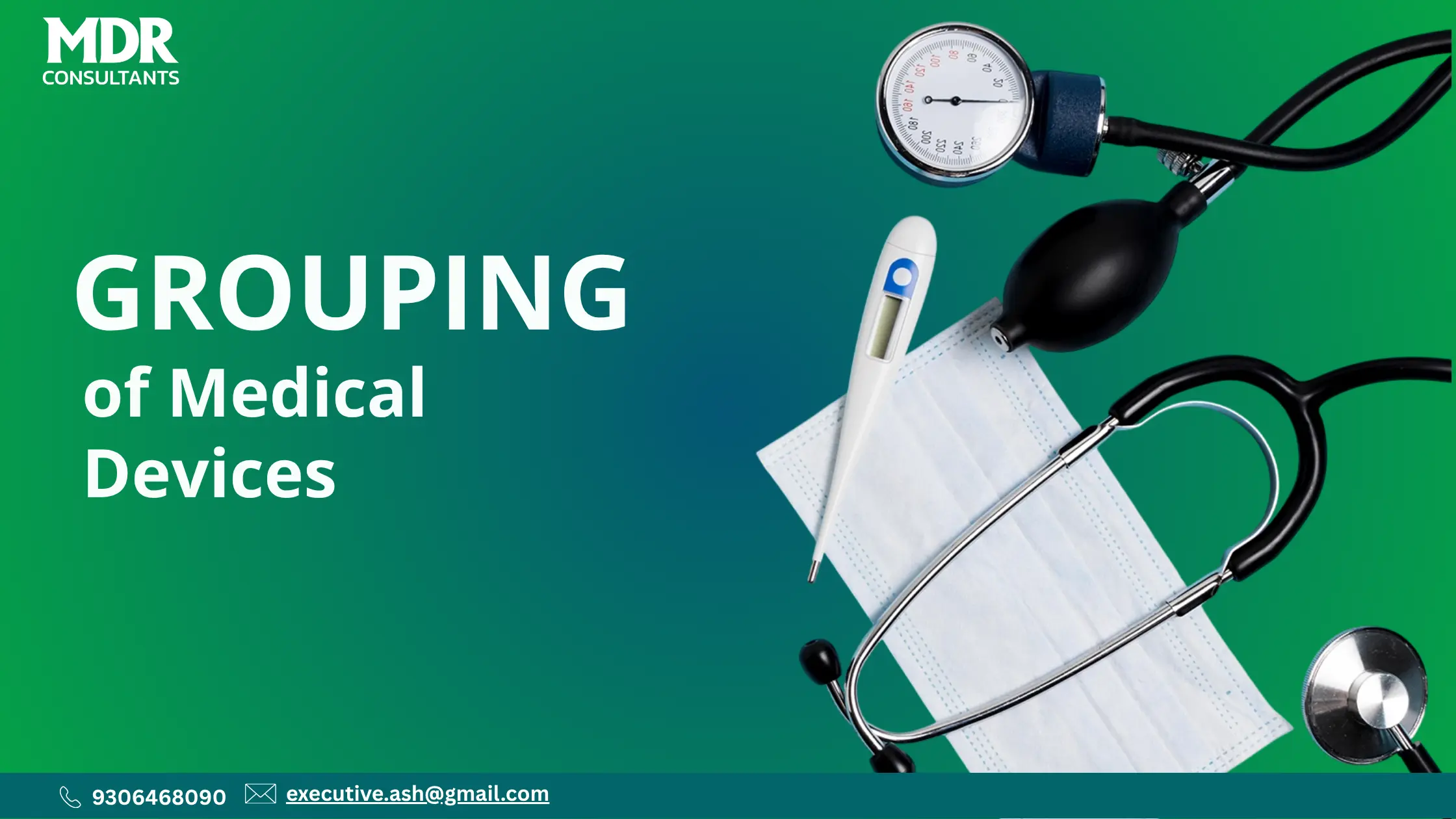
Medical Device Grouping is one of the most important concepts under India’s Medical Devices Rules, 2017 (published via Gazette Notification GSR 78(E)). It allows manufacturers and importers to club similar medical devices under a single license application, significantly reducing documentation, time, and cost.
Instead of applying for separate licenses for each variant, you can group devices based on commonality in intended use, technology, design, and risk class.
Why is Medical Device Grouping Important?
Rule 5 of the Medical Devices Rules, 2017 specifically allows grouping of medical devices as per guidelines issued by the Ministry of Health and Family Welfare.
Types of Medical Device Grouping under MDR 2017
According to the official Grouping Guidelines issued by CDSCO, medical devices can be grouped into the following categories:
|
Grouping Type |
Definition |
Best For |
Example |
|
Single |
A distinct packaged medical device that does not qualify for any other group |
Unique or standalone products |
One specific model of a disposable syringe |
|
Family |
Devices with same intended use, risk class, design, and manufacturing process (minor variations allowed) |
Variants of the same basic device |
Different sizes of surgical gloves or contact lenses with minor feature differences |
|
System |
Devices intended to be used together to achieve a common intended purpose, sold under one proprietary name |
Procedure kits or integrated systems |
A surgical procedure kit containing multiple compatible instruments |
|
Group |
Two or more different devices supplied in a single package by the same license holder |
Combination packs |
First aid kit containing bandages, antiseptic, and scissors |
|
IVD Test Kit |
In-vitro diagnostic reagents supplied together as a kit |
Diagnostic kits |
COVID-19 RT-PCR test kit components |
|
IVD Cluster |
Multiple IVD reagents or instruments with similar technology |
Broad diagnostic platforms |
Multiple blood chemistry reagents |
Key Requirements for Grouping
To qualify for grouping, devices must generally share:
Note: All devices in one application must belong to the same risk class. You cannot mix Class B and Class C devices in a single grouping.
Benefits of Proper Grouping Strategy
However, incorrect grouping can lead to queries from CDSCO, delays in licensing, or even rejection of the application.
Common Mistakes to Avoid
How MDR Consultants Can Help
At MDR Consultants, we specialize in helping medical device manufacturers and importers with:
Whether you are launching a new product range or expanding your existing portfolio, proper grouping can save you significant time and money.
Last Updated : 04 May 2026
The Brand That Promises To Turn Your Business Around!
MDR Consultants excels in guiding medical device companies through global regulatory approvals with tailored solutions, clear communication, and efficient delivery. Their mission-driven approach fosters innovation, compliance, and long-term partnerships built on trust and excellence.

As I observed this company maintains a very good and cooperative environment. "MDR" consultancy is equipped with all modern amenities. They guide you the best. I highly recommend this firm. The entire team is very courteous and helpful. Highly Professional team and the owner is very skilled and humble.

Outstanding expertise! They streamlined our regulatory process, saving us immense time and stress. A truly invaluable partner for medical device compliance.

MDR Consultants have been a reliable partner for our CDSCO registration needs. Their efficient processes and in-depth knowledge of the regulations saved us significant time and resources. We are confident about the quality of their services and their commitment to client satisfaction.

MDR team has consistently delivered quality work, meeting deadlines and exceeding our expectations. We really recommend MDR for regulatory support

My experience with MDR consultants is wonderful. They have in-depth and vast knowledge about their work. They have the team of incredible people. Their commitment towards the client is highly appreciable. I highly recommend to have their services.

MDR IS THE BEST SOLUTION FOR MEDICAL DEVICES CONSULTANCIE THEY PROVIDE ALL THE SOLUTIONS AND PROPER GUIDANCE.AND DELIVER THEIR SERVICES ON TIME .

MDR team has consistently delivered high quality work, meeting deadlines and exceeding our expectations.

It was really a nice experience working with MDR consultancy.They guide you properly with their tranparent work ethics.Honestly MDR consultancy helped me a lot in growing my business.

A very friendly bunch of efficient employees in the team of MDR.A very professional approach towards their job and all my work was done hassle free with least follow up from my side.Keep up great work team MDR!!!!👍👍

The services are top notch , highly recommend for Mr Ashish

Best regulatory services..for medical devices…best in the business

Have a rich experience in the field of consultancy.

Extremely helpful and responsive

Very good experience

Good Services

Appreciable work.

True consultant

Medical Device Regulatory Consultants
37-38, 1st Floor, Near Makhan Bhog, G.T. Road,
Kundli Industrial Area, Delhi NCR, 131028