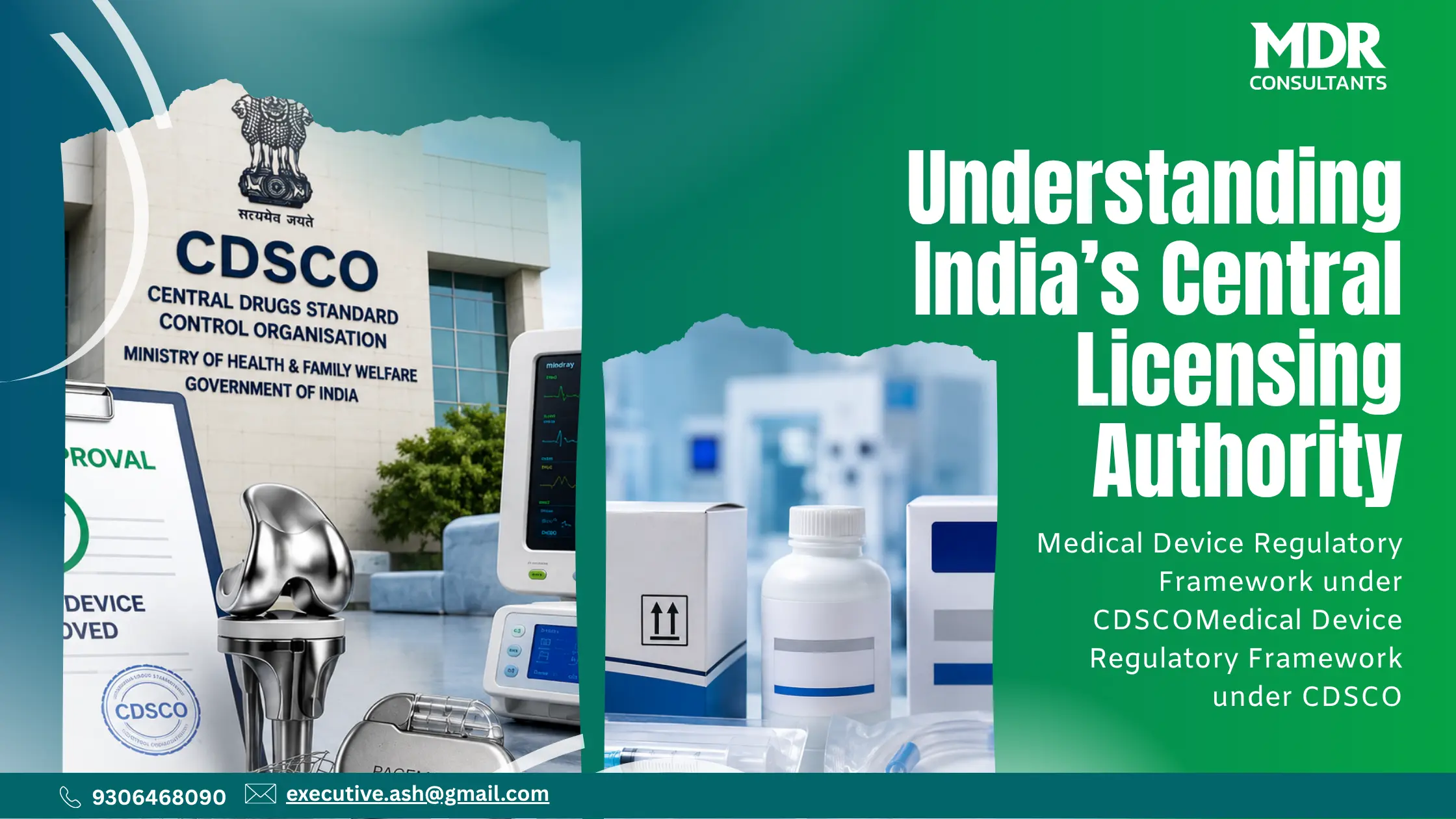
India’s medical device industry is regulated through a structured framework under the Central Drugs Standard Control Organization. Within this system, the Central Licensing Authority plays a central role in approving and monitoring higher-risk medical devices.
As the Indian medical device market expands, understanding the Central Licensing Authority becomes essential for manufacturers, importers, and regulatory consultants. It is the authority responsible for ensuring that devices entering the market meet safety, quality, and performance requirements.
What Is the Central Licensing Authority?
The Central Licensing Authority (CLA) is the designated authority under the Medical Devices Rules, 2017 for granting licenses related to specific categories of medical devices.
It functions under the Central Drugs Standard Control Organization and works under the Ministry of Health and Family Welfare.
The CLA is primarily responsible for regulating:
The framework ensures higher-risk products undergo more detailed regulatory scrutiny.
Why the Central Licensing Authority Is Important?
Medical devices directly impact patient safety. Products such as implants, cardiac devices, ventilators, and diagnostic systems require close evaluation before reaching healthcare facilities.
The CLA helps ensure:
Without this regulatory oversight, unsafe products could enter the healthcare system.
Key Duties of the Central Licensing Authority
The CLA has several regulatory responsibilities.
1. Medical Device Classification
The authority determines the classification of notified devices into risk categories:
These categories are based on intended use, duration of contact, invasiveness, and patient risk.
Higher-risk devices require stricter approval procedures.
2. Granting Import Licenses
Importers bringing medical devices into India require approval through CLA for regulated categories.
Common approvals include:
This ensures imported products comply with Indian regulations.
3. Licensing Manufacturing of Class C and D Devices
The CLA directly grants manufacturing licenses for higher-risk devices.
Examples:
Manufacturers must submit technical documentation, quality systems evidence, and site details.
4. Clinical Investigation Approvals
Before approval of certain innovative devices, clinical investigations may be required.
The CLA reviews applications under:
This includes:
These approvals are critical for novel products.
5. Approval of New Medical Devices
For devices without an existing predicate or established pathway, CLA assesses new product categories.
This includes applications like:
The authority examines:
This pathway supports innovation while maintaining patient protection.
6. Post-Market Surveillance
The CLA also monitors products after market launch.
Responsibilities include:
This ensures continued safety after commercial distribution.
CLA vs State Licensing Authority
India divides regulatory responsibility between central and state authorities.
Central Licensing Authority
Handles:
State Licensing Authority
Handles:
This division improves regulatory efficiency.
Role in Medical Device Registration in India
Any company planning to sell regulated devices in India must understand CLA procedures.
The authority evaluates:
Incorrect submissions often cause delays, rejections, or compliance notices.
Challenges Faced by Applicants
Common issues include:
Regulatory consultants often help reduce approval timelines.
Future of the Central Licensing Authority
The role of CLA is expanding due to newer technologies.
Emerging focus areas:
India is moving toward stronger digital health regulation, and CLA will play a major role in future approvals.
Conclusion
The Central Licensing Authority is one of the most important regulatory bodies in India’s medical device ecosystem. It ensures that high-risk and imported medical devices meet strict standards before entering the market.
Understanding its duties helps companies achieve faster approvals, stronger compliance, and smoother business operations.
For manufacturers and importers, early regulatory planning with expert support can prevent costly delays and licensing issues.
Last Updated : 16 May 2026
The Brand That Promises To Turn Your Business Around!
MDR Consultants excels in guiding medical device companies through global regulatory approvals with tailored solutions, clear communication, and efficient delivery. Their mission-driven approach fosters innovation, compliance, and long-term partnerships built on trust and excellence.

As I observed this company maintains a very good and cooperative environment. "MDR" consultancy is equipped with all modern amenities. They guide you the best. I highly recommend this firm. The entire team is very courteous and helpful. Highly Professional team and the owner is very skilled and humble.

Outstanding expertise! They streamlined our regulatory process, saving us immense time and stress. A truly invaluable partner for medical device compliance.

MDR Consultants have been a reliable partner for our CDSCO registration needs. Their efficient processes and in-depth knowledge of the regulations saved us significant time and resources. We are confident about the quality of their services and their commitment to client satisfaction.

MDR team has consistently delivered quality work, meeting deadlines and exceeding our expectations. We really recommend MDR for regulatory support

My experience with MDR consultants is wonderful. They have in-depth and vast knowledge about their work. They have the team of incredible people. Their commitment towards the client is highly appreciable. I highly recommend to have their services.

MDR IS THE BEST SOLUTION FOR MEDICAL DEVICES CONSULTANCIE THEY PROVIDE ALL THE SOLUTIONS AND PROPER GUIDANCE.AND DELIVER THEIR SERVICES ON TIME .

MDR team has consistently delivered high quality work, meeting deadlines and exceeding our expectations.

It was really a nice experience working with MDR consultancy.They guide you properly with their tranparent work ethics.Honestly MDR consultancy helped me a lot in growing my business.

A very friendly bunch of efficient employees in the team of MDR.A very professional approach towards their job and all my work was done hassle free with least follow up from my side.Keep up great work team MDR!!!!👍👍

The services are top notch , highly recommend for Mr Ashish

Best regulatory services..for medical devices…best in the business

Have a rich experience in the field of consultancy.

Extremely helpful and responsive

Very good experience

Good Services

Appreciable work.

True consultant

Medical Device Regulatory Consultants
37-38, 1st Floor, Near Makhan Bhog, G.T. Road,
Kundli Industrial Area, Delhi NCR, 131028