Introduction
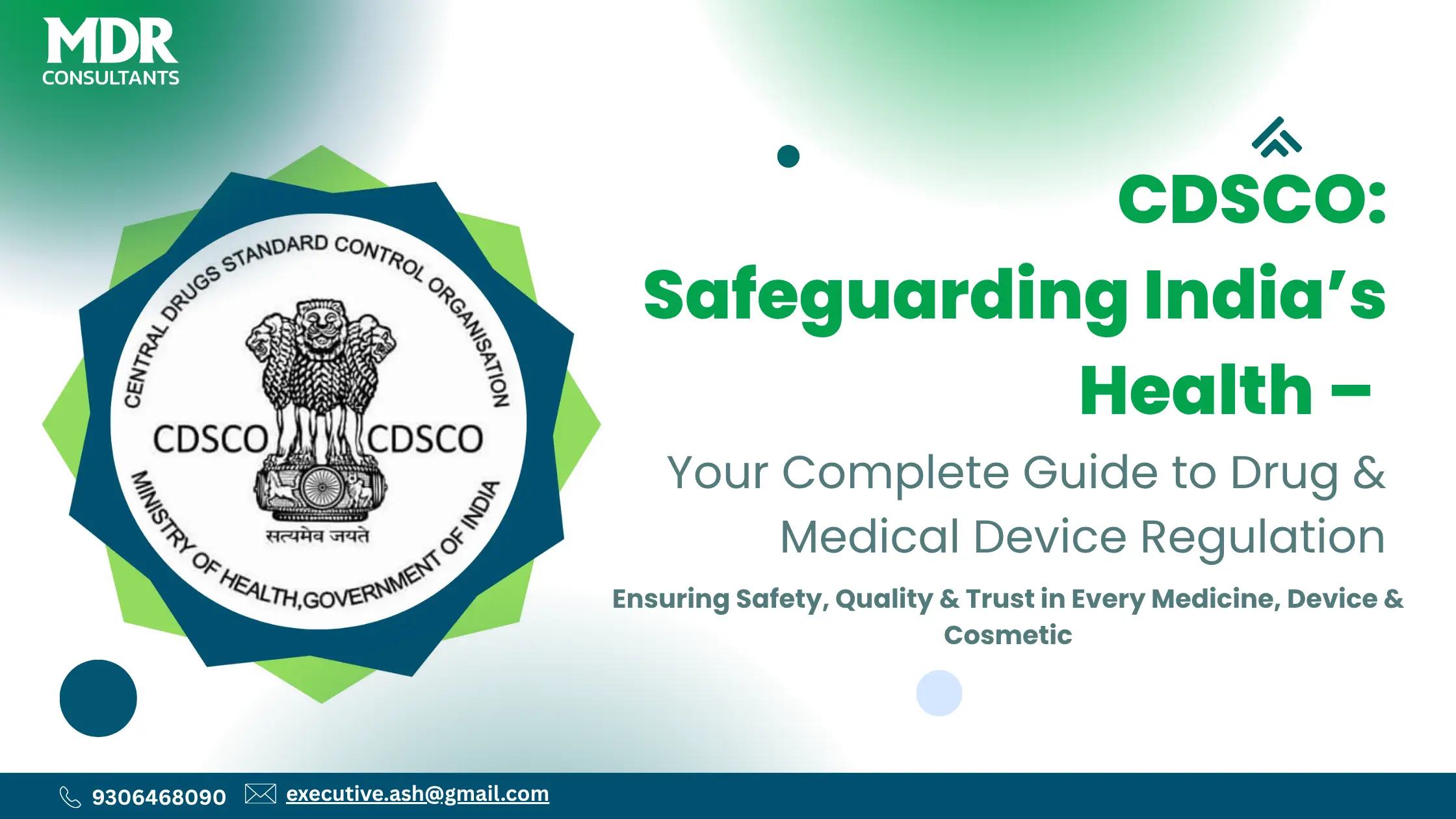
In India's vast healthcare ecosystem, ensuring that every medicine, medical device, and cosmetic product reaching consumers is safe, effective, and of high quality is paramount. This critical responsibility falls on the Central Drugs Standard Control Organization (CDSCO), India's national regulatory authority for pharmaceuticals and related products.
Whether you're a healthcare professional, pharmaceutical entrepreneur, researcher, or simply a conscious consumer, understanding CDSCO helps demystify how India safeguards public health while fostering innovation in the pharma sector. This comprehensive guide breaks down its history, functions, processes, and evolving role in a clear, accessible way.
What is CDSCO?
The Central Drugs Standard Control Organization (CDSCO) operates under the Directorate General of Health Services, Ministry of Health and Family Welfare, Government of India. It serves as the apex body for regulating drugs, cosmetics, medical devices, and in-vitro diagnostics.
Headquartered in New Delhi at FDA Bhawan, CDSCO coordinates with state drug regulatory authorities to ensure uniform implementation of regulations across the country. It maintains a network of zonal offices, sub-zonal offices, port offices, and laboratories nationwide to monitor quality and enforce standards effectively.
Key Fact: The Drugs Controller General of India (DCGI) heads CDSCO and plays a pivotal role in approvals for new drugs, clinical trials, and high-risk categories.
Brief History and Evolution
The foundation of drug regulation in India traces back to the Drugs and Cosmetics Act, 1940, and the associated Rules of 1945. CDSCO evolved as the central authority to address the growing complexities of the pharmaceutical industry post-independence.
Over the decades, its mandate expanded significantly:
This evolution reflects India's ambition to align with global standards while addressing local needs.
Organizational Structure of CDSCO
CDSCO's decentralized structure ensures effective oversight:
It also oversees key advisory bodies like the Drugs Technical Advisory Board (DTAB) and Drugs Consultative Committee (DCC) for expert guidance on technical and policy matters.
Core Functions and Responsibilities
CDSCO's work spans the entire product lifecycle. Here are its major functions:
CDSCO emphasizes transparency, accountability, and patient safety in all operations.
Regulation of Medical Devices and Diagnostics
India's medical devices sector has grown rapidly. The Medical Devices Rules, 2017 classified devices into four risk-based classes (A to D, low to high risk).
CDSCO ensures devices meet safety and performance criteria before reaching hospitals and patients.
Cosmetics Regulation Under CDSCO
Cosmetics are defined under the Drugs and Cosmetics Act as products for cleansing, beautifying, or altering appearance. Manufacturing licenses are handled by State Licensing Authorities, while imports require registration with the Central Licensing Authority (DCGI).
Key requirements include ingredient safety, labeling, and prohibition of certain claims or ingredients. CDSCO's role ensures imported cosmetics meet Indian standards.
Digital Initiatives and Transparency
The SUGAM online portal is a game-changer, allowing stakeholders to apply for approvals, track status, and submit reports electronically. Other initiatives include:
These steps reduce paperwork, minimize corruption risks, and speed up processes.
Why CDSCO Matters for Public Health and Industry
A strong regulator like CDSCO:
Challenges remain, such as harmonizing with global regulators (e.g., FDA, EMA) and addressing resource constraints, but ongoing reforms show a positive trajectory.
Recent Developments and Future Outlook
CDSCO continues to update guidelines, such as those for similar biologics, emergency use authorizations, and risk-based classifications. Stakeholders should regularly check the official website for circulars, public notices, and draft guidelines.
The future likely holds more integration of AI in reviews, stronger post-market surveillance, and alignment with international standards like those from ICH.
Conclusion
The Central Drugs Standard Control Organization (CDSCO) stands as a cornerstone of India's healthcare regulatory framework. By upholding rigorous standards for drugs, medical devices, and cosmetics, it not only protects millions of citizens but also positions India as a responsible global player in pharmaceuticals.
Staying informed about CDSCO regulations is essential for anyone involved in healthcare, manufacturing, or research. For the latest updates, always refer to the official CDSCO website (cdsco.gov.in) and consult experts for specific compliance needs.
Last Updated : 12 Jun 2026
The Brand That Promises To Turn Your Business Around!
MDR Consultants excels in guiding medical device companies through global regulatory approvals with tailored solutions, clear communication, and efficient delivery. Their mission-driven approach fosters innovation, compliance, and long-term partnerships built on trust and excellence.

As I observed this company maintains a very good and cooperative environment. "MDR" consultancy is equipped with all modern amenities. They guide you the best. I highly recommend this firm. The entire team is very courteous and helpful. Highly Professional team and the owner is very skilled and humble.

Outstanding expertise! They streamlined our regulatory process, saving us immense time and stress. A truly invaluable partner for medical device compliance.

MDR Consultants have been a reliable partner for our CDSCO registration needs. Their efficient processes and in-depth knowledge of the regulations saved us significant time and resources. We are confident about the quality of their services and their commitment to client satisfaction.

MDR team has consistently delivered quality work, meeting deadlines and exceeding our expectations. We really recommend MDR for regulatory support

My experience with MDR consultants is wonderful. They have in-depth and vast knowledge about their work. They have the team of incredible people. Their commitment towards the client is highly appreciable. I highly recommend to have their services.

MDR IS THE BEST SOLUTION FOR MEDICAL DEVICES CONSULTANCIE THEY PROVIDE ALL THE SOLUTIONS AND PROPER GUIDANCE.AND DELIVER THEIR SERVICES ON TIME .

MDR team has consistently delivered high quality work, meeting deadlines and exceeding our expectations.

It was really a nice experience working with MDR consultancy.They guide you properly with their tranparent work ethics.Honestly MDR consultancy helped me a lot in growing my business.

A very friendly bunch of efficient employees in the team of MDR.A very professional approach towards their job and all my work was done hassle free with least follow up from my side.Keep up great work team MDR!!!!👍👍

The services are top notch , highly recommend for Mr Ashish

Best regulatory services..for medical devices…best in the business

Have a rich experience in the field of consultancy.

Extremely helpful and responsive

Very good experience

Good Services

Appreciable work.

True consultant

Medical Device Regulatory Consultants
37-38, 1st Floor, Near Makhan Bhog, G.T. Road,
Kundli Industrial Area, Delhi NCR, 131028