India's medical-device manufacturing sector operates under a risk-based regulatory framework established by the Medical Devices Rules, 2017 (MDR 2017), as amended. For manufacturers of eligible Class A and Class B medical devices, understanding the difference between the application submitted to the regulator and the licence ultimately granted is essential.
Two forms are particularly important in this pathway: Form MD-3 and Form MD-5.
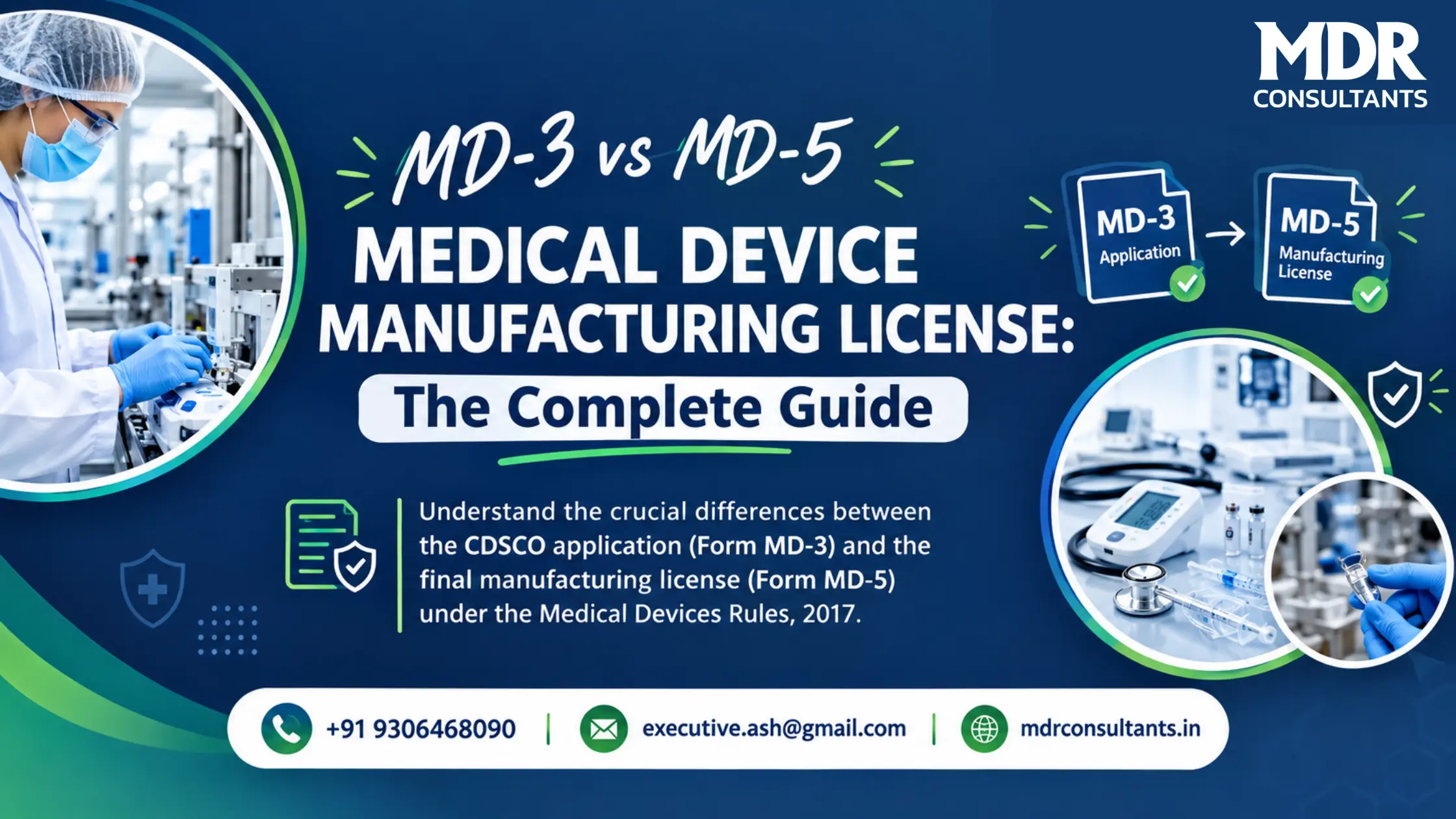
Form MD-3 is the application used to seek a manufacturing licence for applicable Class A and Class B medical devices, while Form MD-5 is the manufacturing licence issued by the State Licensing Authority when the applicable regulatory requirements have been satisfied.
There is, however, an important qualification for Class A devices. Certain Class A non-sterile and non-measuring medical devices are exempt from the licensing regime and are instead subject to registration requirements under the applicable provisions of MDR 2017. Therefore, manufacturers should determine the device's exact classification and regulatory status before deciding whether an MD-3/MD-5 application is required.
MDR 2017 follows a risk-based classification system. Medical devices are generally classified into four categories:
The classification principles are set out in the First Schedule of MDR 2017.
Class A and Class B manufacturing licences are handled by the State Licensing Authority under Rule 20. Higher-risk Class C and Class D manufacturing applications follow the central licensing pathway.
Classification should be completed before preparing the regulatory dossier because it determines the applicable application route, assessment requirements, audit requirements and supporting documentation.
Form MD-3 is the prescribed application for obtaining a licence to manufacture applicable Class A or Class B medical devices for sale or distribution.
Under Rule 20, the application is submitted through the identified online portal and accompanied by the applicable fee and documents specified in Part II of the Fourth Schedule.
The application must also include an undertaking confirming compliance with the Quality Management System requirements specified in the Fifth Schedule.
For manufacturers, MD-3 should therefore be understood as the application stage, not as the manufacturing licence itself.
Manufacturers should first confirm that their device falls within the licensing regime. This is particularly important for Class A devices because non-sterile and non-measuring Class A devices are subject to a specific exemption from licensing, with registration requirements applying instead.
Form MD-5 is the manufacturing licence issued by the State Licensing Authority for applicable Class A and Class B medical devices after the requirements under the Rules have been satisfied.
In simple terms:
MD-3 = Application
MD-5 = Manufacturing Licence
The applicant submits the required information and documentation through the applicable process in Form MD-3. The State Licensing Authority then evaluates the submission and, where applicable, considers the audit report before granting the manufacturing licence in Form MD-5.
The distinction can be summarised as follows:
|
Form |
Purpose |
Who prepares/issues it? |
|
MD-3 |
Application for manufacturing licence |
Manufacturer/applicant |
|
MD-5 |
Manufacturing licence |
State Licensing Authority |
|
MD-4 |
Application for loan licence |
Applicant seeking loan licence |
|
MD-6 |
Loan manufacturing licence |
State Licensing Authority |
The key difference is therefore not the device class but the stage of the regulatory process.
MD-3 begins the application process, whereas MD-5 represents the regulatory authorisation granted after the prescribed requirements have been met.
Before preparing an application, determine:
For Class A devices, specifically check whether the product is non-sterile and non-measuring and falls within the applicable exemption framework. CDSCO's current classification material should be checked because the list is subject to revision.
The manufacturing facility should be capable of meeting the applicable Quality Management System requirements under the Fifth Schedule.
The manufacturer should have appropriate:
The application should contain the documents required under the applicable part of the Fourth Schedule.
Depending on the device, the submission may include information relating to:
The exact documentation should be determined according to the device and applicable CDSCO requirements rather than using a one-size-fits-all dossier.
The Plant Master File (PMF) and Device Master File (DMF) are important components of medical-device regulatory documentation.
The PMF provides information about the manufacturing facility, including relevant aspects of:
The DMF focuses on the medical device itself and may include:
The contents should be tailored to the particular product and applicable regulatory requirements.
Manufacturers applying under Rule 20 must provide an undertaking that the applicable Quality Management System requirements under the Fifth Schedule have been complied with.
ISO 13485 can be an important quality-management reference for medical-device manufacturers, but the article should not suggest that an ISO 13485 certificate is automatically synonymous with fulfilment of every MDR requirement.
Manufacturers should instead ensure that their quality system addresses the requirements applicable under MDR 2017 and the relevant standards.
The audit pathway for Class A devices has an important distinction.
For Class A devices covered by the licensing regime, a manufacturing-site audit by a registered Notified Body is not required before the licence is granted.
After the State Licensing Authority grants the licence, the required Notified Body audit must be conducted within 120 days from the date of grant.
This means that describing the Class A pathway simply as "documentary review followed by an audit" is incomplete. The critical point is that the audit occurs after grant for the applicable licensed Class A devices.
The Class B pathway is different.
The manufacturing site must demonstrate compliance with the applicable QMS requirements through an audit by a registered Notified Body before the licence is granted.
The Rules provide the following framework:
These statutory timelines should not be presented as a guarantee that every application will be completed within the same overall period, particularly where deficiencies or additional regulatory issues arise.
For applicable Class A devices, Rule 20 provides a 45-day period for the State Licensing Authority to grant or reject the application after the application is made, subject to satisfaction of the applicable requirements.
For Class B devices, the timeline is structured around the Notified Body audit and subsequent review:
Actual project timelines can be affected by deficiencies, corrective actions, document queries and other regulatory issues.
Applicable fees are prescribed in the Second Schedule of the Medical Devices Rules, 2017.
The amount payable depends on the relevant licence/application and the applicable device and manufacturing-site requirements.
Because fee provisions and regulatory requirements can be amended, manufacturers should verify the current CDSCO fee schedule before making payment.
One significant point that is often misunderstood is the validity period.
A Form MD-5 manufacturing licence is not ordinarily limited to five years.
Under Rule 29, a licence issued in Form MD-5 remains valid in perpetuity, subject to payment of the prescribed licence retention fee every five years from the date of issue and subject to the licence not being suspended, cancelled or surrendered.
Therefore, manufacturers do not simply "renew" the MD-5 every five years. Instead, they must comply with the applicable licence retention fee requirements.
Manufacturers must continue to comply with the conditions attached to their licence and the Medical Devices Rules.
Changes relating to the manufacturing entity, premises, manufacturing activities, products or other regulated information should be assessed under the applicable variation and notification provisions.
For example, Rule 27 contains specific requirements relating to a change in the constitution of the licensee, including notification and subsequent application requirements.
Manufacturers should therefore avoid making significant changes to their manufacturing operations or regulatory documentation without first determining whether CDSCO or the State Licensing Authority needs to be notified or whether prior approval is required.
Obtaining Form MD-5 does not end the manufacturer's regulatory responsibilities.
The Rules provide for ongoing oversight of licensed manufacturing sites. For Class A and Class B devices, the State Licensing Authority can also conduct unannounced inspections on a random basis, with the Rules specifying a minimum proportion of such inspections.
Manufacturers should consequently maintain continuous readiness in areas such as:
For manufacturers of applicable Class A and Class B medical devices, the easiest way to understand the two forms is:
MD-3 is the application submitted by the manufacturer.
MD-5 is the manufacturing licence granted by the State Licensing Authority.
However, the regulatory analysis must begin one step earlier: Does the particular device require a manufacturing licence at all?
That question is especially important for Class A devices because non-sterile and non-measuring Class A devices are subject to an exemption from the licensing regime under G.S.R. 777(E), with registration requirements applying instead.
Selecting the correct regulatory pathway at the beginning can help manufacturers avoid unnecessary documentation, incorrect fee payments and avoidable regulatory queries.
A proper assessment should cover:
Medical-device regulatory requirements can involve multiple stages, from classification and documentation to licensing, audits and ongoing compliance.
MDR Consultants can support manufacturers with activities such as:
Manufacturers should ensure that their regulatory strategy reflects the current Medical Devices Rules, applicable amendments and the latest CDSCO notices and guidance.
Form MD-3 and Form MD-5 represent two different stages of the medical-device manufacturing approval process in India.
MD-3 is the application for the applicable manufacturing licence, while MD-5 is the licence granted by the State Licensing Authority after the prescribed requirements have been satisfied.
For Class A devices, manufacturers must first establish whether the product falls within the licensing regime because non-sterile and non-measuring Class A devices are subject to a specific licensing exemption and registration framework.
For licensed Class A devices, the required Notified Body audit takes place after grant, whereas Class B manufacturing sites undergo the required Notified Body audit before the MD-5 licence is issued.
Finally, an MD-5 licence remains valid in perpetuity subject to the applicable retention-fee requirements and continuing compliance with MDR 2017.
Manufacturers should therefore treat MD-3/MD-5 compliance as an ongoing regulatory lifecycle rather than a one-time application exercise.
Last Updated : 24 Sep 2026
The Brand That Promises To Turn Your Business Around!
MDR Consultants excels in guiding medical device companies through global regulatory approvals with tailored solutions, clear communication, and efficient delivery. Their mission-driven approach fosters innovation, compliance, and long-term partnerships built on trust and excellence.

As I observed this company maintains a very good and cooperative environment. "MDR" consultancy is equipped with all modern amenities. They guide you the best. I highly recommend this firm. The entire team is very courteous and helpful. Highly Professional team and the owner is very skilled and humble.

Outstanding expertise! They streamlined our regulatory process, saving us immense time and stress. A truly invaluable partner for medical device compliance.

MDR Consultants have been a reliable partner for our CDSCO registration needs. Their efficient processes and in-depth knowledge of the regulations saved us significant time and resources. We are confident about the quality of their services and their commitment to client satisfaction.

MDR team has consistently delivered quality work, meeting deadlines and exceeding our expectations. We really recommend MDR for regulatory support

My experience with MDR consultants is wonderful. They have in-depth and vast knowledge about their work. They have the team of incredible people. Their commitment towards the client is highly appreciable. I highly recommend to have their services.

MDR IS THE BEST SOLUTION FOR MEDICAL DEVICES CONSULTANCIE THEY PROVIDE ALL THE SOLUTIONS AND PROPER GUIDANCE.AND DELIVER THEIR SERVICES ON TIME .

MDR team has consistently delivered high quality work, meeting deadlines and exceeding our expectations.

It was really a nice experience working with MDR consultancy.They guide you properly with their tranparent work ethics.Honestly MDR consultancy helped me a lot in growing my business.

A very friendly bunch of efficient employees in the team of MDR.A very professional approach towards their job and all my work was done hassle free with least follow up from my side.Keep up great work team MDR!!!!👍👍

The services are top notch , highly recommend for Mr Ashish

Best regulatory services..for medical devices…best in the business

Have a rich experience in the field of consultancy.

Extremely helpful and responsive

Very good experience

Good Services

Appreciable work.

True consultant

Medical Device Regulatory Consultants
37-38, 1st Floor, Near Makhan Bhog, G.T. Road,
Kundli Industrial Area, Delhi NCR, 131028