India's medical device sector is experiencing rapid growth, driven by innovation, increased healthcare demand, and evolving regulatory requirements. To improve transparency and simplify the medical device classification process, the Central Drugs Standard Control Organisation (CDSCO) has launched a Dynamic Medical Device Risk Classification Module through its online portal.
This digital initiative represents a significant step toward modernizing India's medical device regulatory framework. Instead of relying solely on manual interpretation of classification rules, manufacturers and importers can now use a structured online system to determine the appropriate risk class for their products.
The portal-based module promotes consistency, reduces classification errors, and helps applicants comply with the Medical Devices Rules (MDR), 2017. Whether you are an Indian manufacturer, overseas manufacturer, importer, or authorized Indian representative, understanding this new module is essential for smoother regulatory approvals and long-term compliance.
In this guide, we explain what the Dynamic Risk Classification Module is, how it works, why it has been introduced, and what businesses should do to stay compliant.
What is the CDSCO Dynamic Medical Device Risk Classification Module?
The Dynamic Medical Device Risk Classification Module is an online digital tool developed by CDSCO to assist applicants in identifying the appropriate risk class of medical devices under the Medical Devices Rules (MDR), 2017.
Rather than manually interpreting complex classification schedules, users can answer a series of structured questions about their medical device. The system evaluates information such as intended use, duration of contact, invasiveness, software functionality, and other technical characteristics before identifying the applicable risk category.
This digital approach improves consistency across applications while reducing ambiguity during the classification process.
The module also supports regulators by ensuring that manufacturers and importers submit applications with greater accuracy, helping streamline the overall approval process.
Why Has CDSCO Introduced the Dynamic Classification Module?
The Indian medical device industry has evolved significantly over the past decade. Advanced technologies such as Artificial Intelligence (AI), Software as a Medical Device (SaMD), connected healthcare solutions, wearable devices, robotic surgery systems, and digital diagnostics have transformed the healthcare landscape.
These innovations have also made medical device classification more complex.
To address these challenges, CDSCO has introduced a digital classification module that aims to standardize the classification process while making regulatory compliance more transparent and efficient.
The key objectives of this initiative include:
By digitizing the classification process, CDSCO is helping businesses navigate regulatory requirements more confidently while enhancing patient safety.
Understanding Medical Device Risk Classification
Medical device risk classification is one of the most important aspects of medical device regulation. Every medical device marketed in India must be assigned to a specific risk category based on the level of potential risk it poses to patients, healthcare professionals, or users.
The assigned risk class determines several regulatory requirements, including:
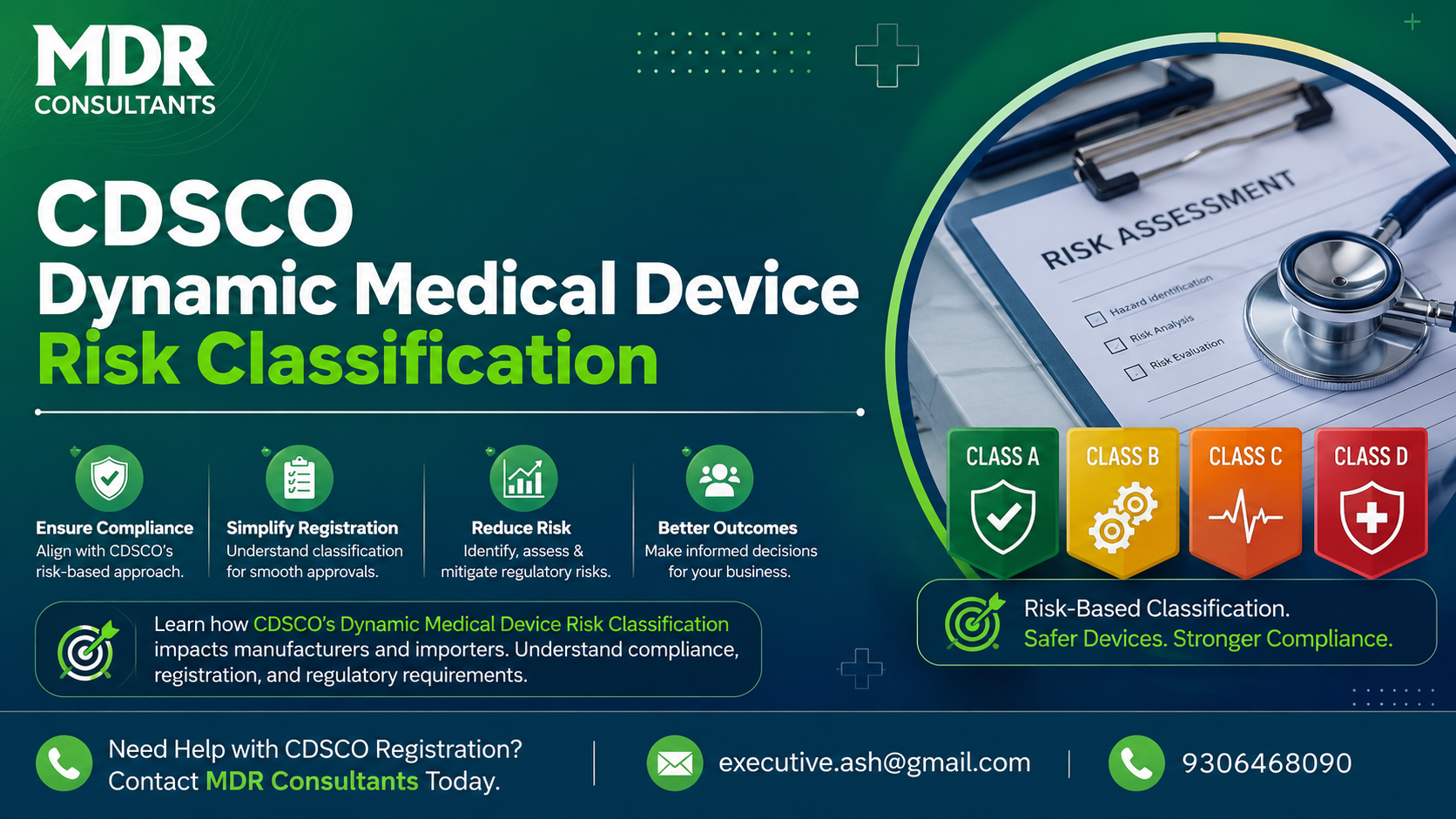
Under the Medical Devices Rules, 2017, medical devices are categorized into four classes.
|
Risk Class |
Risk Level |
Examples |
|
Class A |
Low Risk |
Surgical gloves, tongue depressors |
|
Class B |
Low to Moderate Risk |
Syringes, suction devices |
|
Class C |
Moderate to High Risk |
Dialysis machines, infusion pumps |
|
Class D |
High Risk |
Pacemakers, implantable heart valves |
Generally, devices classified under higher risk categories require more comprehensive documentation and stricter regulatory oversight.
How Does the Dynamic Classification Module Work?
The portal-based module guides applicants through a structured questionnaire that evaluates multiple characteristics of a medical device before assigning its risk category.
Some of the key factors considered include:
After evaluating these parameters, the module applies the classification rules specified under MDR 2017 and identifies the most appropriate risk class.
This systematic process minimizes interpretation errors and ensures greater consistency across applications submitted to CDSCO.
Benefits of the Dynamic Medical Device Risk Classification Module
The implementation of this digital module offers several advantages for manufacturers, importers, and regulatory professionals.
1. Improved Classification Accuracy
The guided questionnaire reduces the possibility of human error by helping applicants correctly interpret classification rules.
2. Faster Regulatory Processing
Correctly classified applications require fewer regulatory clarifications, resulting in quicker review and approval timelines.
3. Greater Transparency
Applicants gain better visibility into the classification process, making regulatory requirements easier to understand.
4. Enhanced Regulatory Compliance
The module encourages businesses to align their applications with MDR 2017 requirements from the initial submission stage.
5. Digital Transformation
The online platform supports India's vision of modernizing healthcare regulation through technology-driven governance.
What Manufacturers Should Do
Medical device manufacturers should use this opportunity to strengthen their regulatory compliance systems.
Some recommended actions include:
Accurate classification not only improves regulatory compliance but also reduces approval delays and enhances market readiness.
What Importers Need to Know
Medical device importers play an equally important role in ensuring regulatory compliance.
Importers should:
Incorrect classification can lead to application deficiencies, licensing delays, and additional regulatory queries.
Conclusion
The introduction of the CDSCO Dynamic Medical Device Risk Classification Module marks another important milestone in India's journey toward a more efficient, transparent, and digitally enabled medical device regulatory ecosystem.
By offering a structured online platform for determining medical device risk classes, CDSCO has simplified one of the most critical aspects of regulatory compliance. The module not only improves consistency and reduces classification errors but also helps manufacturers and importers prepare stronger regulatory submissions.
As India's medical device market continues to expand, businesses that embrace digital regulatory tools, maintain accurate technical documentation, and stay updated with evolving compliance requirements will be better positioned for long-term success. Understanding and effectively utilizing the Dynamic Risk Classification Module is no longer just a regulatory advantage—it is becoming an essential step toward faster approvals, smoother market access, and sustained compliance under the Medical Devices Rules, 2017.
Last Updated : 30 Jul 2026
The Brand That Promises To Turn Your Business Around!
MDR Consultants excels in guiding medical device companies through global regulatory approvals with tailored solutions, clear communication, and efficient delivery. Their mission-driven approach fosters innovation, compliance, and long-term partnerships built on trust and excellence.

As I observed this company maintains a very good and cooperative environment. "MDR" consultancy is equipped with all modern amenities. They guide you the best. I highly recommend this firm. The entire team is very courteous and helpful. Highly Professional team and the owner is very skilled and humble.

Outstanding expertise! They streamlined our regulatory process, saving us immense time and stress. A truly invaluable partner for medical device compliance.

MDR Consultants have been a reliable partner for our CDSCO registration needs. Their efficient processes and in-depth knowledge of the regulations saved us significant time and resources. We are confident about the quality of their services and their commitment to client satisfaction.

MDR team has consistently delivered quality work, meeting deadlines and exceeding our expectations. We really recommend MDR for regulatory support

My experience with MDR consultants is wonderful. They have in-depth and vast knowledge about their work. They have the team of incredible people. Their commitment towards the client is highly appreciable. I highly recommend to have their services.

MDR IS THE BEST SOLUTION FOR MEDICAL DEVICES CONSULTANCIE THEY PROVIDE ALL THE SOLUTIONS AND PROPER GUIDANCE.AND DELIVER THEIR SERVICES ON TIME .

MDR team has consistently delivered high quality work, meeting deadlines and exceeding our expectations.

It was really a nice experience working with MDR consultancy.They guide you properly with their tranparent work ethics.Honestly MDR consultancy helped me a lot in growing my business.

A very friendly bunch of efficient employees in the team of MDR.A very professional approach towards their job and all my work was done hassle free with least follow up from my side.Keep up great work team MDR!!!!👍👍

The services are top notch , highly recommend for Mr Ashish

Best regulatory services..for medical devices…best in the business

Have a rich experience in the field of consultancy.

Extremely helpful and responsive

Very good experience

Good Services

Appreciable work.

True consultant

Medical Device Regulatory Consultants
37-38, 1st Floor, Near Makhan Bhog, G.T. Road,
Kundli Industrial Area, Delhi NCR, 131028