Obtaining approval from the Central Drugs Standard Control Organization (CDSCO) is a crucial step for medical device manufacturers and importers looking to enter the Indian market. However, many applications face delays, queries, or outright rejection due to avoidable mistakes in documentation, regulatory compliance, and submission procedures.
Understanding the common reasons for rejection can significantly improve your chances of obtaining approval without unnecessary delays.
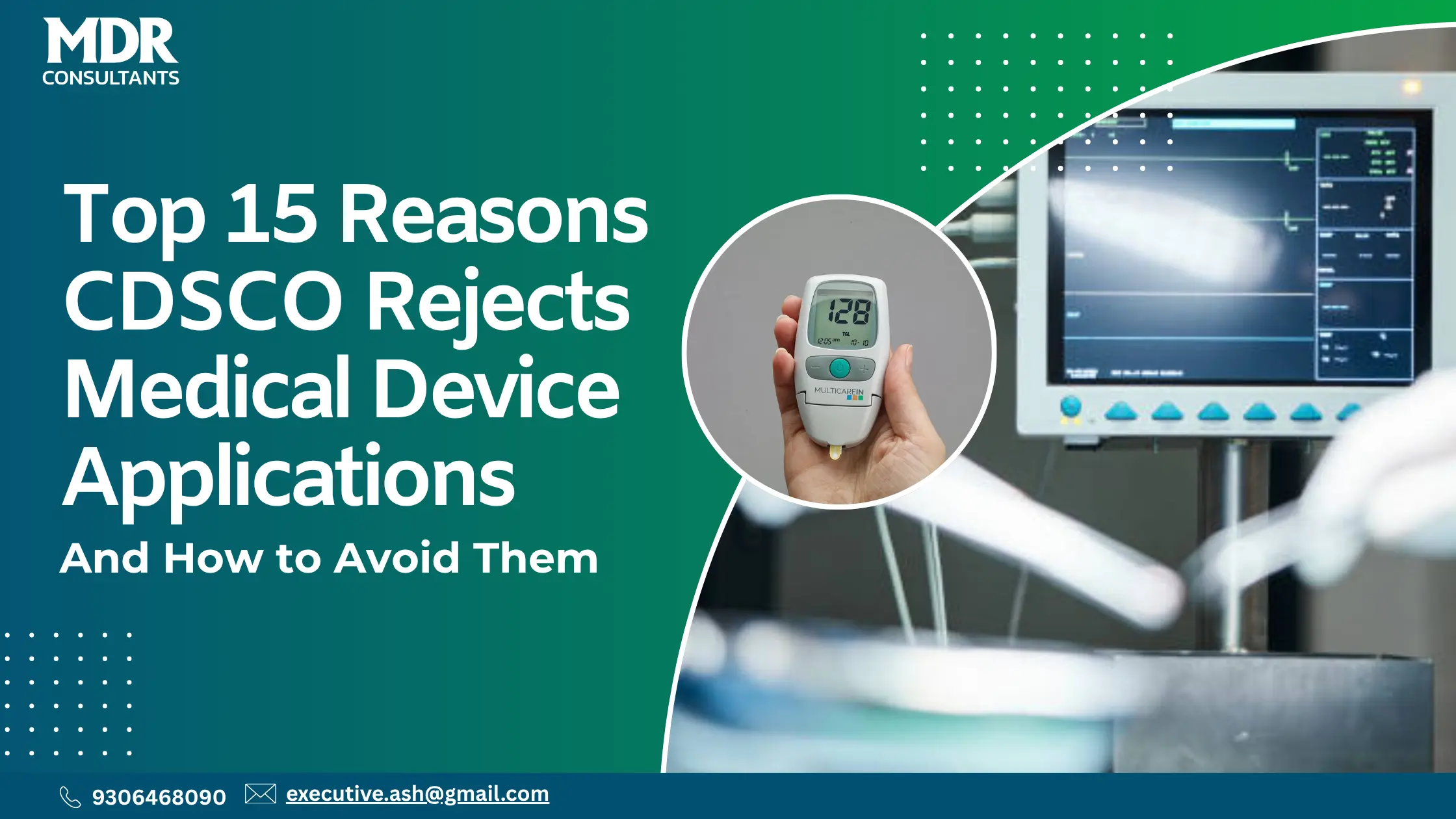
In this guide, our regulatory experts at MDR Consultants explain the top 15 reasons CDSCO rejects medical device applications and how manufacturers and importers can avoid them.
Why Does CDSCO Reject Medical Device Applications?
CDSCO evaluates applications to ensure that medical devices meet the safety, quality, and performance requirements outlined in the Medical Device Rules (MDR), 2017.
Applications may be rejected when:
- Regulatory requirements are not fulfilled
- Documentation is incomplete
- Safety and performance evidence is insufficient
- Information provided is inconsistent or inaccurate
A rejected application can lead to increased costs, delayed market entry, and additional regulatory scrutiny.
1. Incorrect Medical Device Classification
One of the most common reasons for rejection is selecting the wrong risk classification.
Medical devices in India are categorized as:
- Class A (Low Risk)
- Class B (Low Moderate Risk)
- Class C (Moderate High Risk)
- Class D (High Risk)
An incorrect classification can result in submitting the wrong application type and documentation.
How to Avoid It
Conduct a detailed classification assessment based on the First Schedule of Medical Device Rules, 2017 before filing your application.
2. Incomplete Documentation
Missing documents frequently trigger deficiencies and rejection notices.
Common missing documents include:
- Free Sale Certificate
- ISO 13485 Certificate
- Power of Attorney
- Device Master File
- Plant Master File
- Labeling Documents
How to Avoid It
Use a comprehensive CDSCO documentation checklist before submission.
3. Inconsistent Information Across Documents
CDSCO carefully reviews all submitted documents.
Differences in:
- Device name
- Model numbers
- Manufacturer details
- Intended use
- Address information
can raise concerns and lead to rejection.
How to Avoid It
Verify that all documents contain identical information before submission.
4. Deficient Device Master File (DMF)
The Device Master File provides technical information about the device.
Common deficiencies include:
- Missing design details
- Inadequate risk analysis
- Incomplete manufacturing information
- Lack of performance data
How to Avoid It
Prepare the DMF according to CDSCO guidelines and international regulatory standards.
5. Poorly Prepared Plant Master File (PMF)
The PMF demonstrates the manufacturing facility's compliance and quality management systems.
CDSCO may reject applications if:
- Manufacturing processes are unclear
- Facility details are incomplete
- Quality controls are insufficiently described
How to Avoid It
Ensure the PMF accurately reflects actual manufacturing operations.
6. Invalid ISO 13485 Certification
ISO 13485 certification is a key requirement for many medical device applications.
Applications may be rejected if:
- Certification has expired
- Certification body lacks accreditation
- Scope does not cover the device
How to Avoid It
Verify certificate validity and ensure appropriate scope coverage before submission.
7. Inadequate Risk Management Documentation
CDSCO expects manufacturers to implement risk management processes in accordance with ISO 14971.
Common issues include:
- Missing risk analysis
- Incomplete hazard identification
- Lack of mitigation measures
How to Avoid It
Develop a comprehensive Risk Management File covering the entire product lifecycle.
8. Insufficient Clinical Evidence
For many Class C and Class D devices, clinical evidence is essential.
CDSCO may reject applications when:
- Clinical data is inadequate
- Studies are outdated
- Evidence does not support intended use
How to Avoid It
Submit robust clinical evaluation reports and supporting data.
9. Labeling Non-Compliance
Labeling deficiencies remain a major cause of regulatory objections.
Common issues include:
- Missing importer information
- Incorrect manufacturer details
- Absence of mandatory warnings
- Non-compliant symbols
How to Avoid It
Review labeling requirements under MDR 2017 and applicable CDSCO guidance.
10. Failure to Appoint an Authorized Agent
Foreign manufacturers must appoint an authorized Indian representative.
Applications may be rejected if:
- Authorization documents are incomplete
- Agent information is inaccurate
- Power of Attorney is invalid
How to Avoid It
Ensure all authorization documents are properly executed and notarized where required.
11. Incorrect Application Forms
Using the wrong application form is a surprisingly common mistake.
Examples include:
- MD-14
- MD-3
- MD-7
- MD-8
Selecting the wrong form can lead to immediate rejection.
How to Avoid It
Confirm application requirements based on device classification and business activity.
12. Poor Quality e-Portal Submission
Many applications encounter issues because of:
- Corrupt files
- Incorrect file formats
- Illegible scans
- Improper document naming
How to Avoid It
Conduct a thorough quality review before uploading documents to the CDSCO portal.
13. Non-Compliance with Essential Principles
Manufacturers must demonstrate conformity with Essential Principles of Safety and Performance.
Applications often fail because:
- Compliance evidence is incomplete
- Testing reports are insufficient
- Performance claims lack justification
How to Avoid It
Prepare an Essential Principles Checklist supported by objective evidence.
14. Failure to Respond to CDSCO Queries
CDSCO frequently issues clarification requests during the review process.
Delayed or inadequate responses can result in rejection.
How to Avoid It
Monitor application status regularly and respond promptly to all regulatory queries.
15. Lack of Regulatory Strategy
Many companies treat CDSCO approval as a documentation exercise rather than a regulatory process.
This often results in:
- Incorrect submission pathways
- Missing requirements
- Regulatory delays
How to Avoid It
Develop a clear regulatory strategy before initiating the application process.
Best Practices to Improve CDSCO Approval Success
To maximize the likelihood of approval:
✅ Conduct device classification assessment
✅ Prepare complete DMF and PMF documentation
✅ Verify ISO 13485 compliance
✅ Ensure labeling compliance
✅ Maintain risk management records
✅ Review all application forms carefully
✅ Respond promptly to CDSCO queries
✅ Work with experienced regulatory professionals
How MDR Consultants Can Help
Navigating CDSCO requirements can be complex, especially for first-time applicants and international manufacturers.
At MDR Consultants, we assist manufacturers, importers, and authorized agents with:
- Medical Device Registration
- CDSCO Import License Applications
- Manufacturing License Applications
- Device Classification
- Technical Documentation Preparation
- Regulatory Gap Assessments
- Authorized Agent Services
- Post-Approval Compliance Support
Our regulatory experts help clients reduce approval delays and improve submission quality for successful market entry in India.
Conclusion
CDSCO rejections are often preventable when applications are prepared correctly and regulatory requirements are fully understood. By avoiding the common mistakes outlined above, manufacturers can significantly improve approval timelines and reduce compliance risks.
If you are planning to register or import a medical device in India, partnering with experienced regulatory consultants can help streamline the approval process and improve your chances of success.
Need help with CDSCO Medical Device Registration? Contact MDR Consultants today for expert regulatory guidance and end-to-end compliance support.