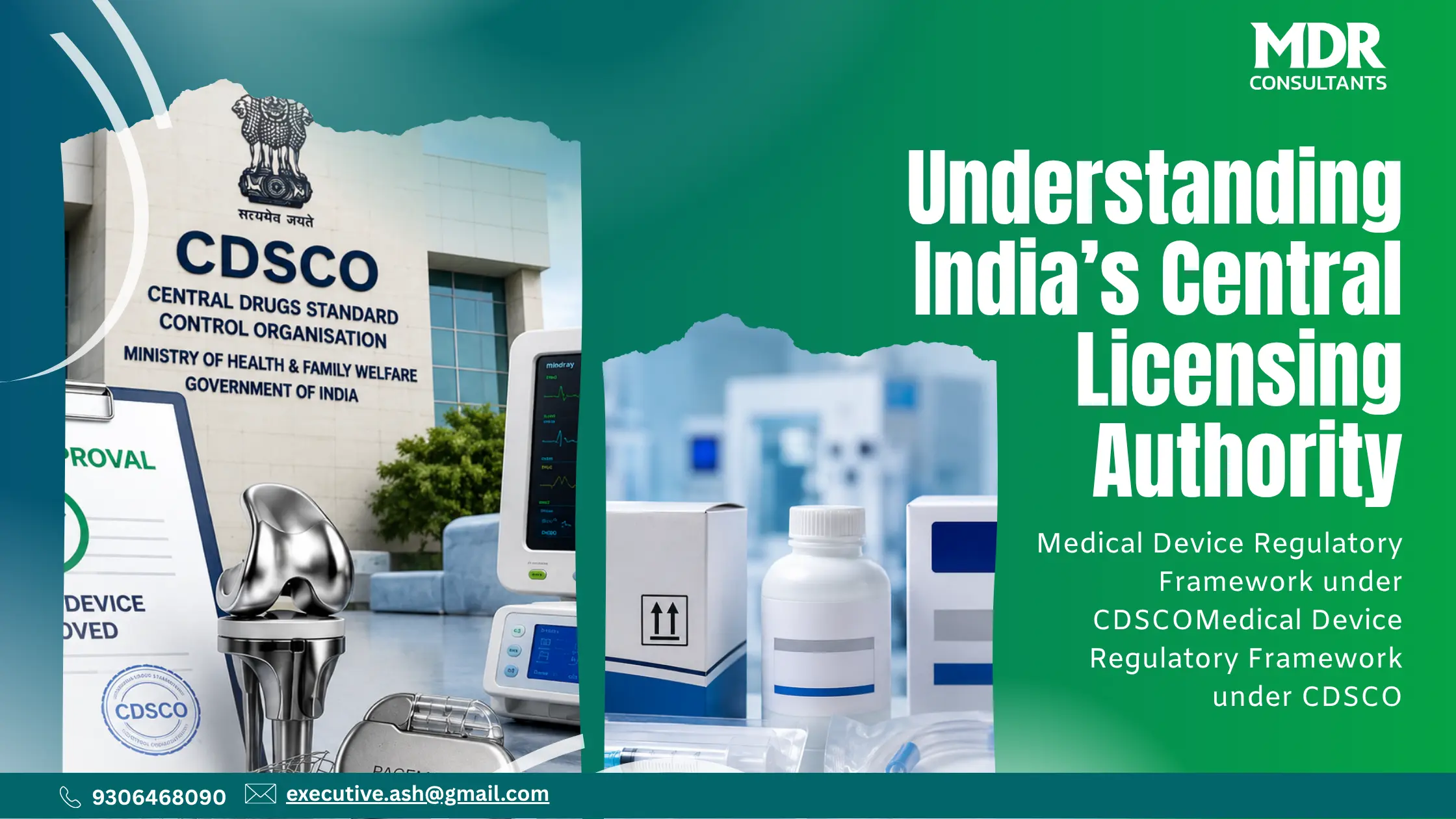
India’s medical device industry is regulated through a structured framework under the Central Drugs Standard Control Organization. Within this system, the Central Licensing Authority plays a central role in approving and monitoring higher-risk medical devices.
As the Indian medical device market expands, understanding the Central Licensing Authority becomes essential for manufacturers, importers, and regulatory consultants. It is the authority responsible for ensuring that devices entering the market meet safety, quality, and performance requirements.
What Is the Central Licensing Authority?
The Central Licensing Authority (CLA) is the designated authority under the Medical Devices Rules, 2017 for granting licenses related to specific categories of medical devices.
It functions under the Central Drugs Standard Control Organization and works under the Ministry of Health and Family Welfare.
The CLA is primarily responsible for regulating:
- Import of medical devices
- Licensing of Class C devices
- Licensing of Class D devices
- Clinical investigations
- Approval of new medical devices
- Post-market surveillance
- Enforcement actions
The framework ensures higher-risk products undergo more detailed regulatory scrutiny.
Why the Central Licensing Authority Is Important?
Medical devices directly impact patient safety. Products such as implants, cardiac devices, ventilators, and diagnostic systems require close evaluation before reaching healthcare facilities.
The CLA helps ensure:
- Device safety
- Quality assurance
- Regulatory consistency
- Compliance with Indian standards
- International harmonization
Without this regulatory oversight, unsafe products could enter the healthcare system.
Key Duties of the Central Licensing Authority
The CLA has several regulatory responsibilities.
1. Medical Device Classification
The authority determines the classification of notified devices into risk categories:
- Class A
- Class B
- Class C
- Class D
These categories are based on intended use, duration of contact, invasiveness, and patient risk.
Higher-risk devices require stricter approval procedures.
2. Granting Import Licenses
Importers bringing medical devices into India require approval through CLA for regulated categories.
Common approvals include:
- MD-14 application review
- MD-15 import license issuance
- Review of Device Master File
- Review of Plant Master File
- Foreign manufacturing verification
This ensures imported products comply with Indian regulations.
3. Licensing Manufacturing of Class C and D Devices
The CLA directly grants manufacturing licenses for higher-risk devices.
Examples:
- Orthopedic implants
- Cardiac implants
- Ventilators
- Hemodialysis systems
- Critical diagnostic equipment
Manufacturers must submit technical documentation, quality systems evidence, and site details.
4. Clinical Investigation Approvals
Before approval of certain innovative devices, clinical investigations may be required.
The CLA reviews applications under:
- MD-22
- MD-23
This includes:
- Study protocols
- Ethics approvals
- Investigator details
- Risk analysis
- Clinical data
These approvals are critical for novel products.
5. Approval of New Medical Devices
For devices without an existing predicate or established pathway, CLA assesses new product categories.
This includes applications like:
- MD-25
- MD-27
The authority examines:
- Safety evidence
- Performance data
- Clinical outcomes
- International approvals
- Technical comparability
This pathway supports innovation while maintaining patient protection.
6. Post-Market Surveillance
The CLA also monitors products after market launch.
Responsibilities include:
- Adverse event monitoring
- Recall oversight
- Compliance inspections
- License suspension
- Investigation of complaints
This ensures continued safety after commercial distribution.
CLA vs State Licensing Authority
India divides regulatory responsibility between central and state authorities.
Central Licensing Authority
Handles:
- Class C devices
- Class D devices
- Imports
- Clinical investigations
- New devices
State Licensing Authority
Handles:
- Class A devices
- Class B devices
This division improves regulatory efficiency.
Role in Medical Device Registration in India
Any company planning to sell regulated devices in India must understand CLA procedures.
The authority evaluates:
- Application forms
- Device documentation
- Quality certifications
- Technical standards
- Labeling
- Risk classification
Incorrect submissions often cause delays, rejections, or compliance notices.
Challenges Faced by Applicants
Common issues include:
- Wrong classification
- Incomplete DMF
- Missing PMF
- Labeling errors
- IFU deficiencies
- Delay in clarification responses
Regulatory consultants often help reduce approval timelines.
Future of the Central Licensing Authority
The role of CLA is expanding due to newer technologies.
Emerging focus areas:
- AI medical software
- SaMD
- Digital diagnostics
- Wearables
- Remote healthcare devices
- Connected therapeutic systems
India is moving toward stronger digital health regulation, and CLA will play a major role in future approvals.
Conclusion
The Central Licensing Authority is one of the most important regulatory bodies in India’s medical device ecosystem. It ensures that high-risk and imported medical devices meet strict standards before entering the market.
Understanding its duties helps companies achieve faster approvals, stronger compliance, and smoother business operations.
For manufacturers and importers, early regulatory planning with expert support can prevent costly delays and licensing issues.