India's medical device sector is rapidly expanding, driven by innovation, rising healthcare demands, and increasing regulatory focus on patient safety. The Medical Devices Rules, 2017 (MDR 2017 or IMDR 2017), notified by the Ministry of Health and Family Welfare and enforced by the Central Drugs Standard Control Organisation (CDSCO), mark a significant shift toward a risk-based, quality-centric regulatory framework for medical devices and in-vitro diagnostics (IVDs).
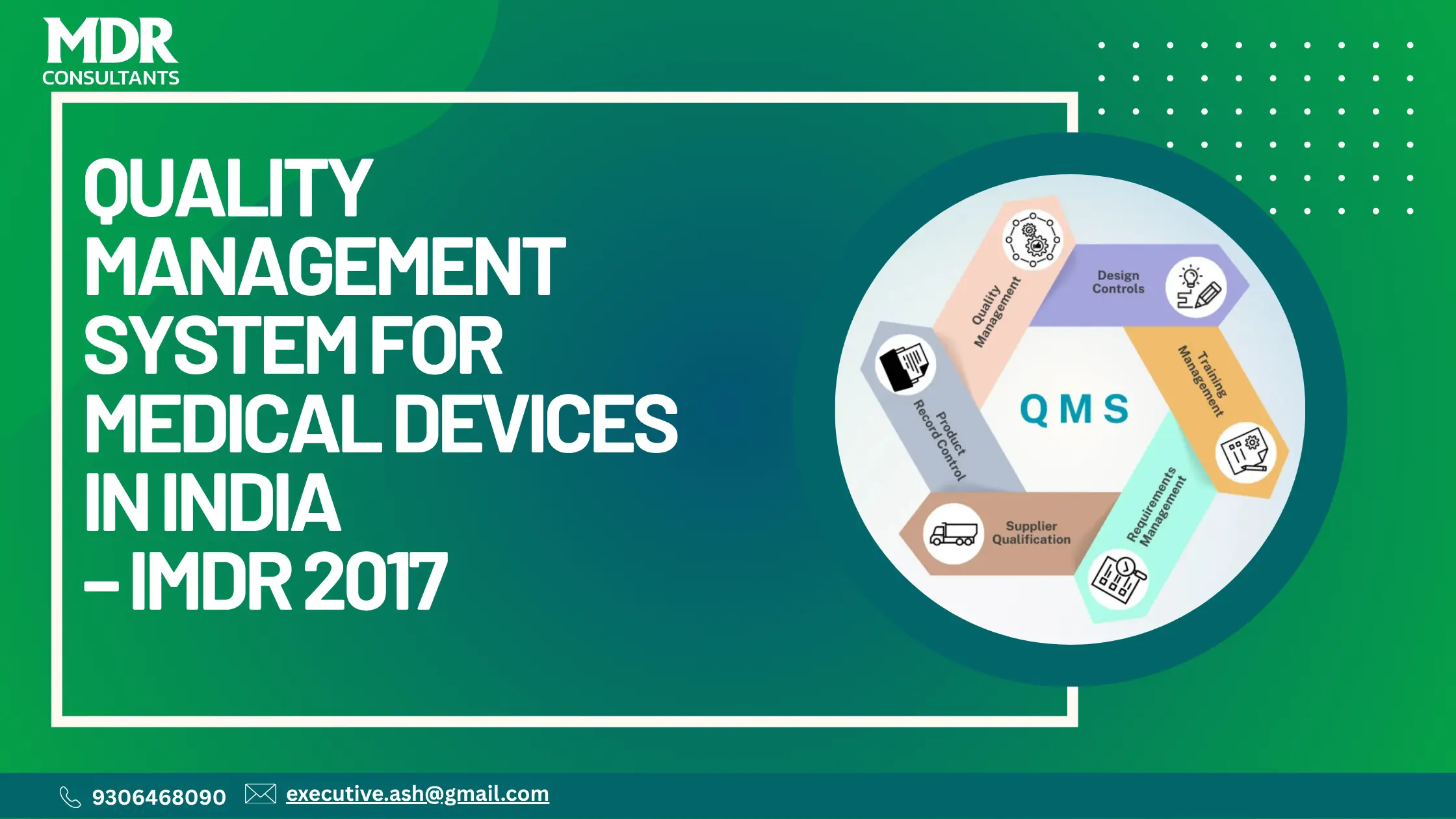
A robust Quality Management System (QMS) is at the heart of these rules, ensuring devices are safe, effective, and consistently manufactured.
Why QMS Matters Under IMDR 2017
The IMDR 2017 classifies medical devices into four risk-based classes (A: low risk, B: low-moderate, C: moderate-high, D: high risk) and mandates QMS compliance for manufacturing, import, and distribution.
Key definitions and scope (from the Rules):
- “Quality Management System” means requirements for manufacturing of medical devices as specified in the Fifth Schedule.
The Fifth Schedule outlines comprehensive requirements aligned closely with ISO 13485:2003/2016 (with some India-specific elements like environmental controls for cleanrooms). It covers the full product lifecycle: design and development (where applicable), manufacturing, packaging, labelling, testing, installation, and servicing.
Applicability: Manufacturers of finished devices, IVDs, mechanical contraceptives, surgical dressings, sutures, blood bags, etc. Even partial operations (e.g., only assembly or sterilization) require relevant QMS controls. Outsourced processes remain the manufacturer's responsibility.
Core Requirements of the Fifth Schedule (QMS)
The Fifth Schedule establishes a process-based QMS. Major sections include:
- General Requirements
- Establish, document, implement, and maintain a QMS.
- Identify processes, their sequence, interactions, and criteria for effectiveness.
- Manage outsourced processes with appropriate controls.
- Apply a risk-based approach throughout.
- Documentation Requirements
- Quality Policy and Objectives.
- Quality Manual (scope, procedures, process interactions).
- Documented procedures and records.
- Device Master File (as per Fourth Schedule) for each device type.
- Plant Master File detailing facilities, personnel, etc.
- Control of documents and records (including electronic systems with backups, access controls, and audit trails).
- Management Responsibility
- Top management commitment, customer focus, quality policy.
- Planning (objectives, QMS integrity during changes).
- Responsibility, authority, and a Management Representative.
- Management reviews for suitability, adequacy, and effectiveness.
- Resource Management
- Competent personnel (training, awareness).
- Infrastructure and work environment (including specific cleanroom classifications for certain processes, e.g., ISO Class 5 for cardiac stent packaging).
- Contamination control.
- Product Realization
- Planning of product realization.
- Customer-related processes.
- Design and Development controls (inputs, outputs, reviews, verification, validation, transfer, changes) — where applicable.
- Purchasing and supplier controls.
- Production and service provision (process validation, identification, traceability, preservation, customer property).
- Control of monitoring and measuring equipment (calibration).
- Measurement, Analysis, and Improvement
- Monitoring and measurement (customer satisfaction, processes, product).
- Control of nonconforming product.
- Data analysis.
- Corrective and Preventive Action (CAPA).
- Internal audits.
- Improvement and continual enhancement of the QMS.
Additional India-specific aspects include environmental controls, post-market surveillance (PMS), vigilance reporting, and alignment with Essential Principles of Safety and Performance.
QMS Compliance by Device Class
- Class A & B (Lower Risk): Manufacturing licence from State Licensing Authority (SLA). QMS verified by Notified Body audit for Class B (and often Class A). Undertaking of Fifth Schedule compliance required.
- Class C & D (Higher Risk): Central Licensing Authority (CLA/CDSCO) involvement. QMS compliance (Fifth Schedule) plus technical review; site inspection often by CLA or Notified Body.
ISO 13485 Certification is widely accepted and often practically required (or strongly recommended) as it aligns closely with the Fifth Schedule. Many manufacturers pursue certification to demonstrate compliance efficiently.
Implementation Tips for Manufacturers
- Gap Analysis: Compare current systems against Fifth Schedule and ISO 13485.
- Risk Management: Integrate ISO 14971 throughout.
- Documentation: Maintain Device Master File, Plant Master File, and robust records.
- Audits & Training: Conduct regular internal audits; ensure personnel competency.
- Post-Market Surveillance: Establish systems for complaint handling, adverse event reporting, and field safety corrective actions.
- Technology: Use electronic QMS (eQMS) for better traceability and efficiency.
- Notified Bodies: Engage accredited ones registered with CDSCO for audits.
Challenges for Indian manufacturers (especially SMEs) include resource constraints, supply chain controls, and awareness. Phased implementation and expert support help overcome these.
Benefits of a Strong QMS
- Ensures regulatory compliance and faster approvals via SUGAM portal.
- Enhances product quality, reduces recalls, and builds patient trust.
- Facilitates global market access (exports often require ISO 13485).
- Supports continual improvement and innovation.
Conclusion
The IMDR 2017, through the Fifth Schedule, has professionalized India's medical device industry by mandating a comprehensive, risk-based QMS. Compliance is not just a regulatory checkbox — it is a strategic enabler for quality, safety, and business growth in a competitive global landscape.
Manufacturers should view QMS implementation as an investment in excellence. Staying updated with CDSCO guidelines, FAQs, and amendments is essential. Consulting regulatory experts or seeking ISO 13485 certification can significantly smooth the journey.
Stay compliant. Deliver quality. Transform healthcare.