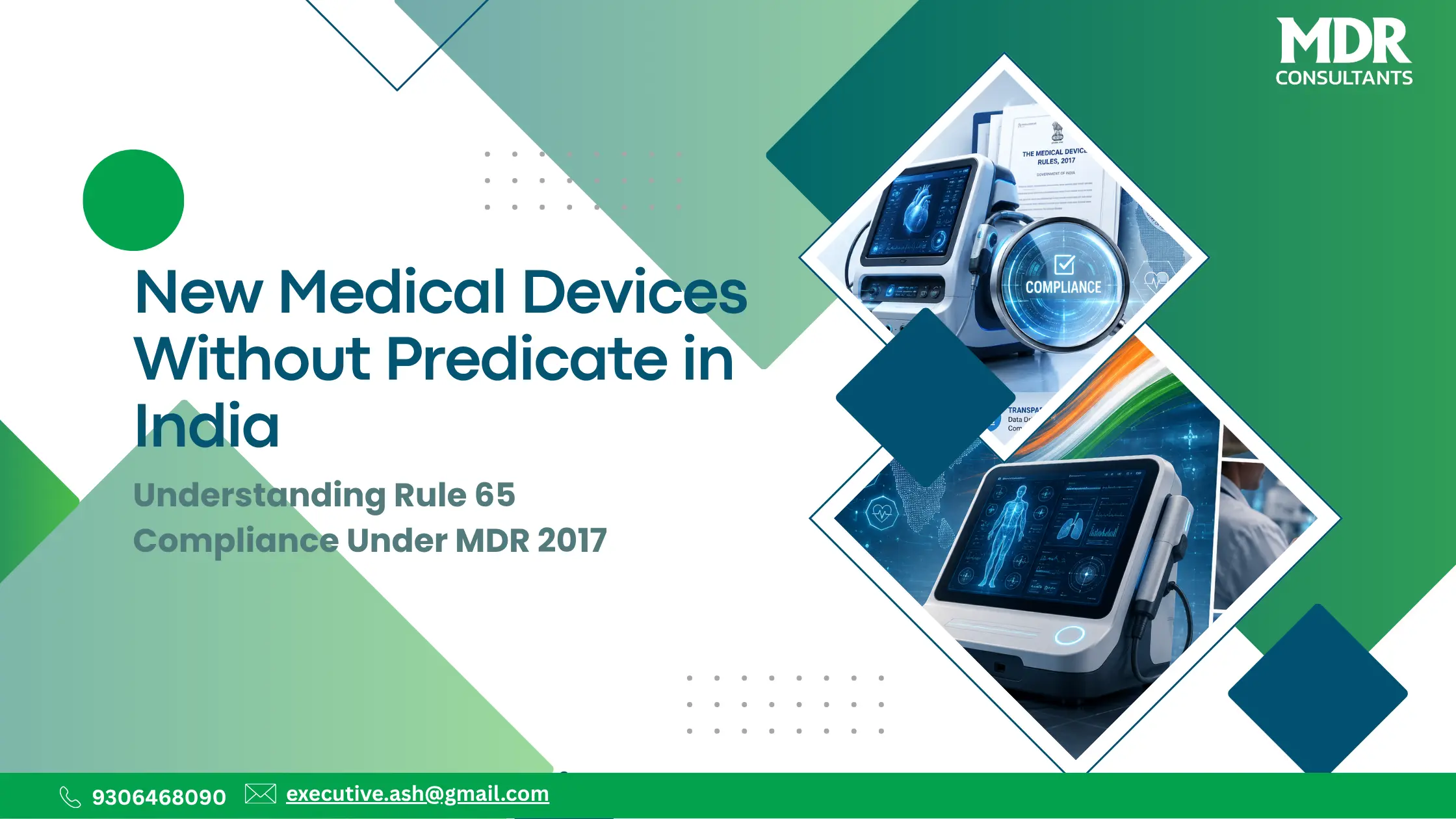
India’s medical device regulatory framework under the Medical Devices Rules, 2017 (MDR 2017) places special emphasis on new medical devices and in vitro diagnostic (IVD) devices that do not have a predicate device. These devices, being novel in nature, are subject to stricter regulatory oversight to ensure safety, quality, and performance.
Under Rule 63 and Rule 64, permissions are granted in Form MD-27 (import) and Form MD-29 (manufacture). However, these permissions come with specific conditions outlined in Rule 65, which every stakeholder must strictly comply with.
Let’s break down these conditions in a clear and practical way.
What is a Device Without a Predicate?
A medical device without a predicate refers to a new or innovative product that does not have a previously approved equivalent device in India. Because of the lack of prior reference, regulators require additional monitoring and data reporting to ensure patient safety.
Key Conditions Under Rule 65
1. Compliance with Approved Specifications
The medical device must strictly conform to the specifications submitted during the application process.
Any deviation from the approved design, materials, or intended use can lead to:
- Regulatory action
- Suspension or cancellation of permission
👉 This ensures consistency between what is approved and what is marketed.
2. Mandatory Periodic Safety Update Reports (PSUR)
For permission holders under Form MD-27 (Import):
- PSUR must be submitted every 6 months for the first 2 years
- After that, it must be submitted annually for the next 2 years
These reports include:
- Safety data
- Adverse events
- Risk-benefit analysis
👉 This ongoing monitoring helps regulators track real-world device performance.
3. Intimation of Market Launch
The permission holder must inform the Central Licensing Authority (CLA) about the date of market launch.
This step is critical because:
- It triggers the timeline for PSUR submission
- Enables regulatory tracking of the product lifecycle
4. Reporting of Serious Adverse Events
Any suspected unexpected serious adverse event must be reported:
- To the Central Licensing Authority
- Within 15 days of becoming aware of the event
This includes:
- Patient harm
- Device malfunction leading to risk
- Any unforeseen safety issue
👉 Timely reporting is essential for protecting public health and initiating corrective actions.
Why These Conditions Matter
For new medical devices without predicates, there is limited prior safety data. These conditions help:
- Ensure continuous safety monitoring
- Enable quick regulatory intervention
- Build trust in innovative medical technologies
- Maintain accountability of manufacturers and importers
Common Challenges Faced by Companies
Companies dealing with such devices often encounter:
- Complex documentation and regulatory requirements
- Continuous reporting obligations (PSURs)
- Strict timelines for adverse event reporting
- Increased scrutiny from authorities
Without proper regulatory planning, this can lead to:
- Delays in market entry
- Higher compliance costs
- Risk of non-compliance
How to Stay Compliant
To ensure smooth approval and post-market compliance:
- Maintain robust documentation systems
- Set up vigilance and reporting mechanisms
- Track PSUR timelines carefully
- Train teams on regulatory obligations
- Work with experienced regulatory consultants
Conclusion
Obtaining permission for a new medical device without a predicate in India is just the beginning. Rule 65 of MDR 2017 ensures that such devices are continuously monitored even after they enter the market.
For manufacturers and importers, compliance is not optional—it is a critical responsibility that directly impacts patient safety and business success.
Staying proactive, organized, and informed is the key to navigating these regulatory requirements effectively.