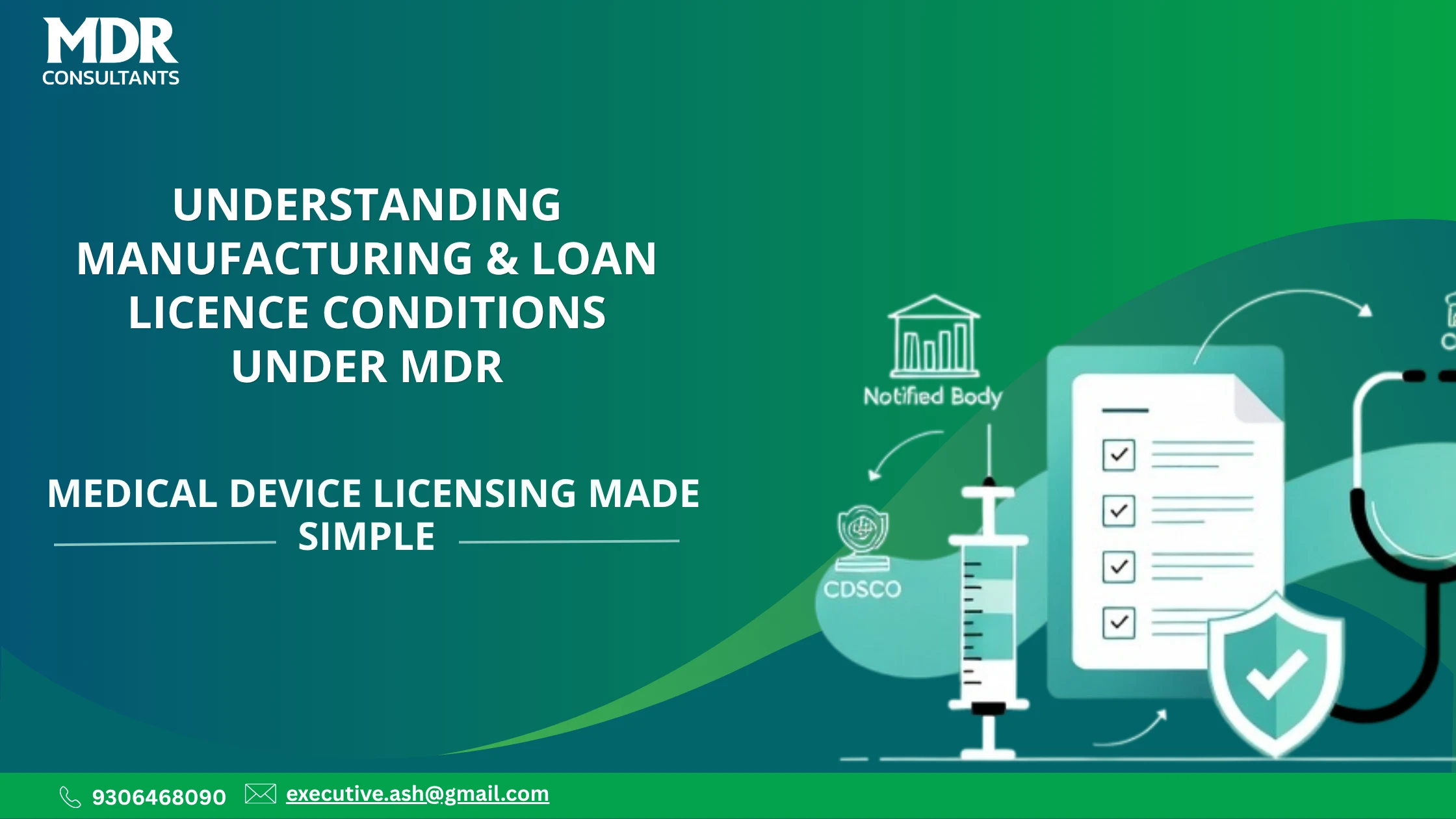
The medical device industry operates under strict regulatory oversight to ensure safety, quality, and accountability. Once a manufacturing licence or loan licence is granted (in Forms MD-5, MD-6, MD-9, or MD-10), the licence holder must follow a detailed set of conditions. These requirements are designed to maintain product integrity and protect public health.
Let’s break down these conditions in a simple and practical way.
1. Always Keep Your Licence Accessible
The licence holder must produce the licence whenever requested by a Medical Device Officer or any authorized senior official. This ensures transparency and compliance during inspections.
2. Reporting Serious Adverse Events
If any suspected unexpected serious adverse event occurs, the licence holder must:
- Report it to the relevant licensing authority (Central or State)
- Include details of actions taken (such as recalls)
- Do this within 15 days of becoming aware of the event
This requirement is critical for patient safety and regulatory monitoring.
3. Approval for Major Changes
Before making any major change (as defined in the Sixth Schedule), prior approval must be obtained from the licensing authority.
- The authority has 45 days to respond
- If no response is received within that time, the change is automatically deemed approved
4. Intimation of Minor Changes
For minor changes, prior approval is not required. However:
- The authority must be informed within 30 days after the change
5. Mandatory Batch Testing
Every batch of medical devices must be tested before release to ensure it meets specifications.
Testing can be done:
- In the manufacturer’s own lab, or
- In a registered external laboratory (as per Rule 83)
6. Recall of Non-Conforming Products
If a batch is found non-compliant:
- The licence holder must withdraw remaining stock from sale
- Recall already distributed products, as far as practicable
This ensures defective products don’t remain in circulation.
7. Maintain an Inspection Record Book
An audit/inspection book (Form MD-11) must be maintained so that:
- Inspectors can record observations
- Non-conformities are documented
8. Retention of Samples
For invasive and in vitro diagnostic devices, manufacturers must:
- Keep at least one sample from each batch
- Retain it for 180 days after expiry of the batch
This helps in investigations and quality checks.
9. Maintain Manufacturing and Sales Records
Detailed records must be maintained and made available for inspection by regulatory authorities at any time.
10. Provide User Information
Every medical device sold must include:
- A package insert or
- A user manual, wherever applicable
This ensures proper usage and safety.
11. Supervision by Qualified Staff
All manufacturing and testing activities must be conducted under the supervision of competent technical personnel.
12. Intimation of Shutdown or Closure
If manufacturing stops or the site is closed for 30 days or more, the licence holder must inform the relevant authority.
Why These Conditions Matter
These rules are not just bureaucratic formalities—they ensure:
- Product quality and consistency
- Patient safety
- Traceability and accountability
- Quick response to risks and defects
For manufacturers, compliance is essential not only for legal reasons but also for building trust in the market.
Final Thoughts
Holding a manufacturing or loan licence for medical devices comes with significant responsibility. The conditions outlined in this regulation create a structured framework that promotes safety, transparency, and efficiency across the industry.
If you’re involved in medical device manufacturing, understanding and implementing these requirements isn’t optional—it’s foundational to your operations.