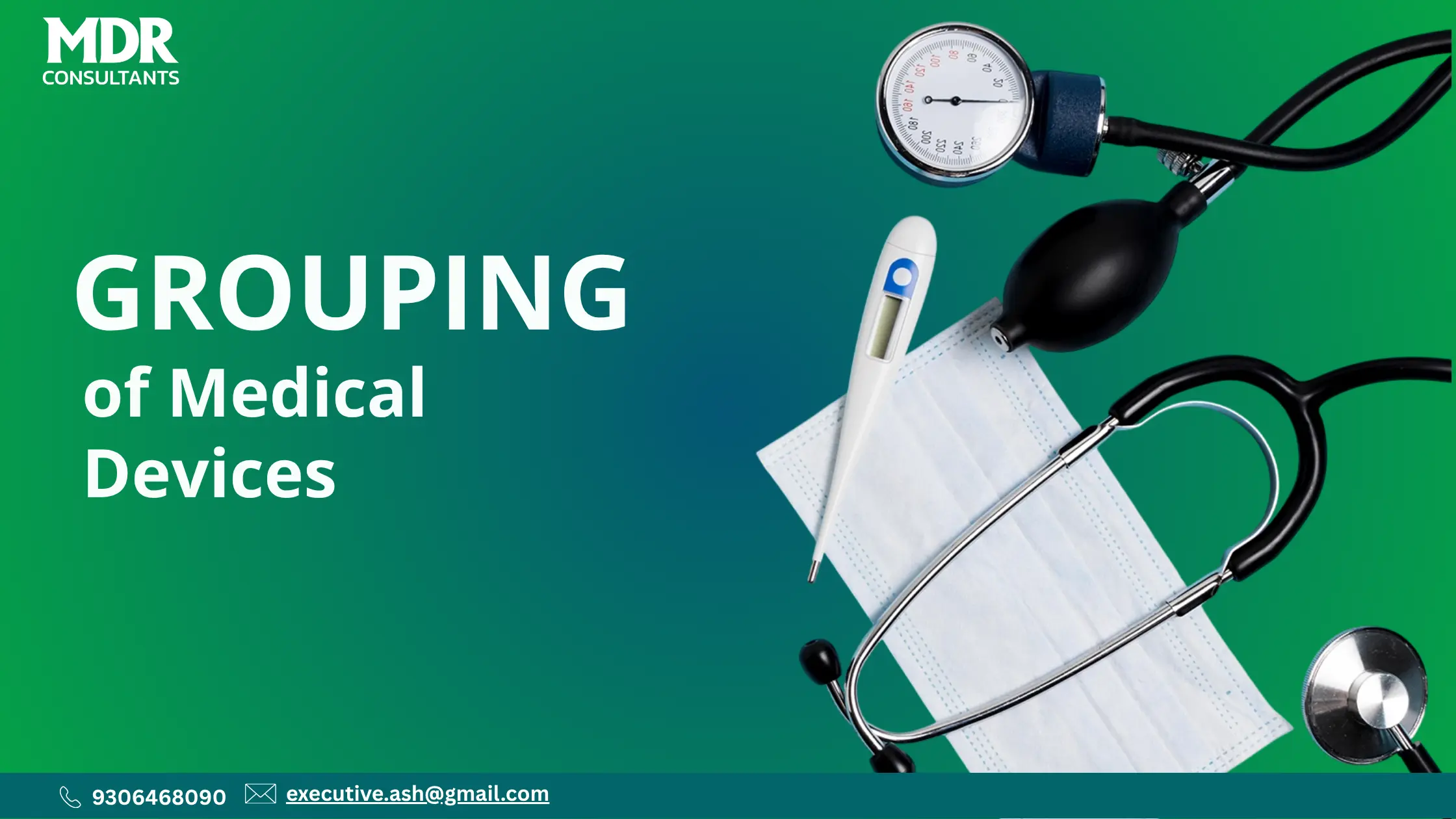
Medical Device Grouping is one of the most important concepts under India’s Medical Devices Rules, 2017 (published via Gazette Notification GSR 78(E)). It allows manufacturers and importers to club similar medical devices under a single license application, significantly reducing documentation, time, and cost.
Instead of applying for separate licenses for each variant, you can group devices based on commonality in intended use, technology, design, and risk class.
Why is Medical Device Grouping Important?
- Reduces the number of applications and fees
- Simplifies regulatory submissions to CDSCO / State Licensing Authority
- Saves time during Notified Body audits and conformity assessment
- Helps in efficient portfolio management for manufacturers and importers
Rule 5 of the Medical Devices Rules, 2017 specifically allows grouping of medical devices as per guidelines issued by the Ministry of Health and Family Welfare.
Types of Medical Device Grouping under MDR 2017
According to the official Grouping Guidelines issued by CDSCO, medical devices can be grouped into the following categories:
|
Grouping Type |
Definition |
Best For |
Example |
|
Single |
A distinct packaged medical device that does not qualify for any other group |
Unique or standalone products |
One specific model of a disposable syringe |
|
Family |
Devices with same intended use, risk class, design, and manufacturing process (minor variations allowed) |
Variants of the same basic device |
Different sizes of surgical gloves or contact lenses with minor feature differences |
|
System |
Devices intended to be used together to achieve a common intended purpose, sold under one proprietary name |
Procedure kits or integrated systems |
A surgical procedure kit containing multiple compatible instruments |
|
Group |
Two or more different devices supplied in a single package by the same license holder |
Combination packs |
First aid kit containing bandages, antiseptic, and scissors |
|
IVD Test Kit |
In-vitro diagnostic reagents supplied together as a kit |
Diagnostic kits |
COVID-19 RT-PCR test kit components |
|
IVD Cluster |
Multiple IVD reagents or instruments with similar technology |
Broad diagnostic platforms |
Multiple blood chemistry reagents |
Key Requirements for Grouping
To qualify for grouping, devices must generally share:
- Same risk classification (Class A, B, C, or D)
- Same intended use
- Common technology / design principles
- Same manufacturer / license holder
- Similar manufacturing process
Note: All devices in one application must belong to the same risk class. You cannot mix Class B and Class C devices in a single grouping.
Benefits of Proper Grouping Strategy
- Lower Fees – One application instead of multiple
- Faster Approval – Less documentation and review time
- Easier Compliance – Simplified Quality Management System (QMS) and technical documentation
- Better Market Strategy – Easier to manage product portfolio
However, incorrect grouping can lead to queries from CDSCO, delays in licensing, or even rejection of the application.
Common Mistakes to Avoid
- Mixing different risk classes in one group
- Grouping devices with significantly different intended uses
- Not maintaining proper technical documentation for each variant
- Ignoring Notified Body requirements for Class B, C & D devices
How MDR Consultants Can Help
At MDR Consultants, we specialize in helping medical device manufacturers and importers with:
- Accurate device classification as per First Schedule of MDR 2017
- Strategic grouping of medical devices for optimal licensing
- Preparation of technical documentation and application dossiers (Form MD-3, MD-7, MD-26, etc.)
- Support during Notified Body audits and Conformity Assessment
- CDSCO license applications for manufacturing (MD-5 / MD-9) and import
Whether you are launching a new product range or expanding your existing portfolio, proper grouping can save you significant time and money.