In a world where a simple syringe, a life-saving pacemaker, or an AI-powered diagnostic scanner can mean the difference between recovery and tragedy, one question stands out:
Can we really afford to leave medical devices unregulated?
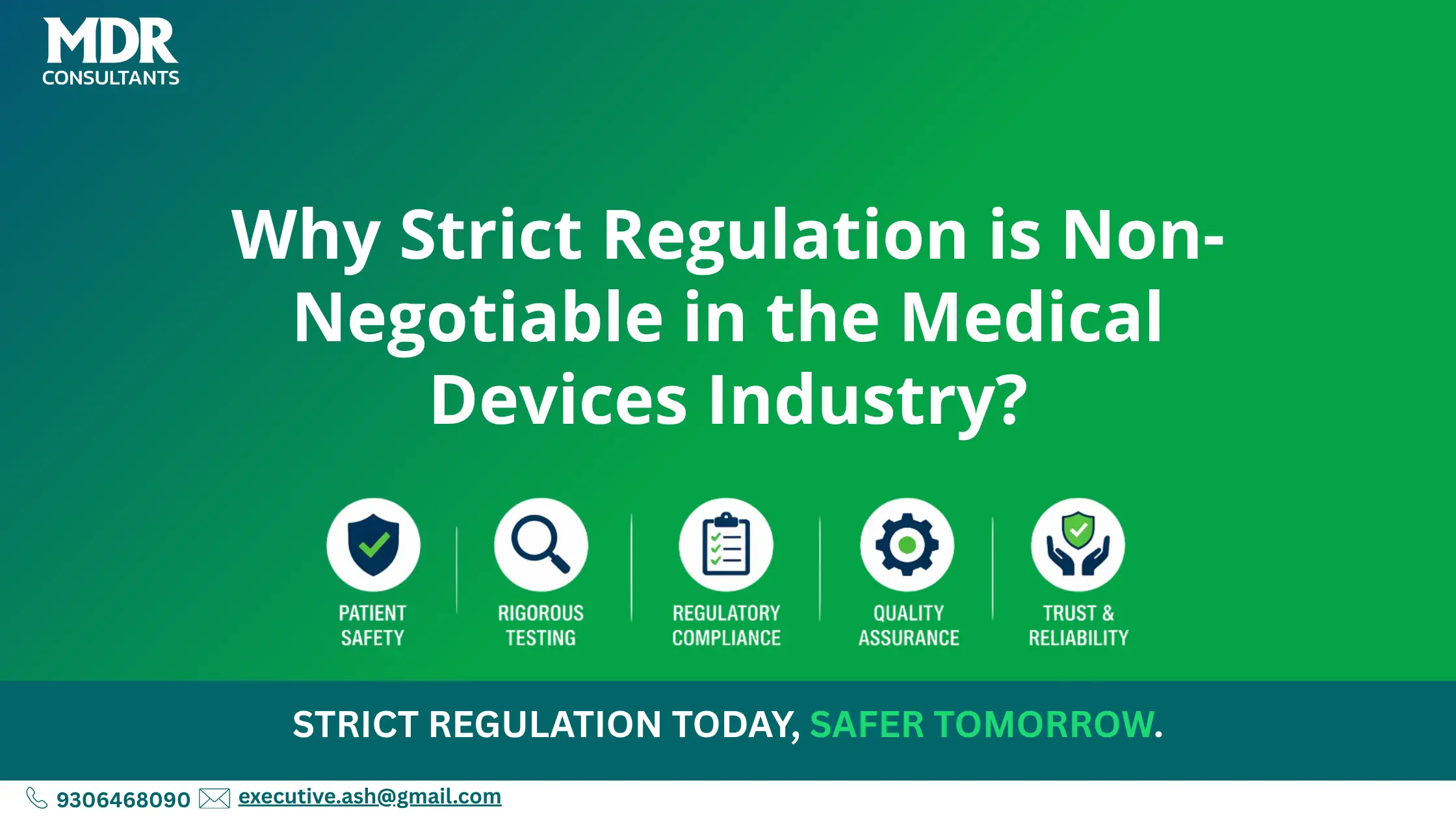
The answer is a clear No. As the global medical devices market surges past $600 billion in 2026 and heads toward $1 trillion+ in the next decade, robust regulation has become essential — not as red tape, but as a critical safety net for patients, a foundation for trust, and a driver for responsible innovation.
1. Patient Safety First: Devices Touch Lives Directly
Unlike medicines that are metabolized by the body, most medical devices work through physical, mechanical, or electrical means. They are implanted, inserted, or used for critical monitoring — often for years.
Without regulation:
- Design flaws, manufacturing defects, or poor materials can cause irreversible harm.
- Substandard or counterfeit devices can easily reach hospitals and homes.
Real-world lessons from history:
- The PIP breast implant scandal — thousands of women received implants filled with non-medical industrial silicone, leading to ruptures, inflammation, and long-term health issues.
- Metal-on-metal hip implants caused metal poisoning (metallosis), tissue damage, and painful revision surgeries for many patients.
- Faulty ventilators, insulin pumps, and surgical staplers have led to hidden injuries and even deaths when oversight was weak.
Strong regulations enforce risk-based classification, mandatory testing, quality management systems (like ISO 13485), and post-market surveillance to catch problems early and protect lives.
2. Ensuring Devices Actually Work (Safety + Effectiveness)
A device may be “safe” but useless if it fails to deliver accurate results. False readings in diagnostics can delay treatment, while ineffective implants waste resources and endanger patients.
Regulations require manufacturers to prove both safety and performance through:
- Laboratory (bench) testing
- Clinical investigations (where needed)
- Real-world evidence
This prevents ineffective products from entering the market and ensures manufacturers’ claims are backed by science.
3. Building Trust in Healthcare Systems
Doctors, hospitals, and patients need confidence that every approved device meets high standards. Clear regulations provide independent oversight, standardized labeling, and traceability — building that trust.
For the industry, compliance opens global markets (FDA, EU MDR, India’s CDSCO, etc.). Non-compliance risks recalls, bans, lawsuits, and reputational damage — costs far higher than investing in quality upfront.
4. Fostering Responsible Innovation, Not a Race to the Bottom
Many fear that regulation slows innovation. In reality, well-designed rules encourage better innovation by:
- Setting clear pathways for approval
- Creating a level playing field
- Pushing companies toward higher standards in design, biocompatibility, cybersecurity (especially for connected/AI devices), and usability
Unregulated markets allow corner-cutting by unethical players, which hurts legitimate innovators and damages the entire sector’s reputation.
5. Economic & Public Health Advantages
- Reduces long-term costs — Fewer complications, hospital readmissions, and revision surgeries.
- Supports fair competition — Prevents cheap, unsafe imports from flooding the market.
- Promotes local manufacturing — In countries like India, frameworks such as the Medical Devices Rules, 2017 (GSR 78(E)) help reduce heavy import dependence and boost “Make in India” initiatives.
- Protects vulnerable populations — Especially important in large, diverse markets during public health crises.
6. Tackling Modern Challenges
Today’s devices are smarter — software-driven, IoT-connected, and AI-enabled. Regulations must evolve to address:
- Cybersecurity risks
- Algorithm transparency
- Continuous learning systems
- Sustainability
Global harmonization efforts (like IMDRF principles) help countries align while adapting to local needs.
Why India’s GSR 78(E) Matters in This Global Picture
Before 2017, most medical devices in India were regulated loosely under drug rules — creating a dangerous mismatch. The Medical Devices Rules, 2017 (notified via GSR 78(E)) introduced a dedicated, risk-based framework (Class A to D), licensing, clinical investigation pathways, and better post-market vigilance.
It was a necessary step to:
- Separate devices from drugs
- Enhance patient safety
- Encourage domestic manufacturing
- Align with international standards
This framework continues to evolve, supporting India’s ambition to become a global medtech hub while safeguarding its 1.4 billion citizens.
Final Thought: Regulation is Protection, Not Obstacle
Medical devices hold immense power to heal, diagnose, and improve quality of life. But that power comes with responsibility. Strong, science-based, and adaptive regulations ensure innovation serves humanity without causing harm.
They protect patients, empower ethical manufacturers, build public confidence, and create a sustainable industry. History has shown us the painful cost of weak oversight — we cannot afford to repeat those mistakes.